The Politics of Crazy in paperback

PoliticsOfCrazy_YLW2The people have spoken and paper still rules. The Politics of Crazy is now available in a paperback format at this link.

For those who haven’t read it, here are a few older posts that touch on some of the themes in the book. First, a look at the economic transformation placing new strains on our culture and politics:

We Are Richer Than We Realize

Haircuts and the Cost of Time

The Decline of Social Capital

Some of the implications of these changes for political philosophy:

Where the Crazy May Be Coming From

It’s Hamilton vs. Jefferson All Over Again

How older libertarian policy approaches, not the Neo-Confederate thinking of the von Mises folks, but the law and economics approach of the Chicago School, may offer a smarter, more effective government:

How to End the Welfare State

Win the Drug War by Regulating Marijuana

Markets Could End Illegal Immigration

And most of all, we need to recognize that for all our problems, human beings have never had it so good. This is an amazing era in which to be alive, and conditions are getting better at a stunning, unprecedented rate.

Optimists are Winning

Tagged with:
Posted in Politics of Crazy, Uncategorized

Why remain in the GOP?

trumpFor the past several months, polls indicate that a solid majority of Republican voters plan to support Donald Trump, Ted Cruz, or Ben Carson. Congress under Republican leadership has devolved into a freak show of conspiracy hunters and religious eccentrics, utterly incapable of managing the nation’s affairs. Delusional rhetoric on immigrants and abortion providers is starting to get people killed.

At the national level, the Party of Lincoln is now the Party of Fox News. No Republican of any power or prominence is resisting the tide of crazy sweeping over the party. There is no sign of any relief on the way.

Even for a “Lifer” this is a tough environment. Under these circumstances how can any responsible person remain active in the Republican Party?

As conditions grow more extreme the usual explanations ring hollow. Working for change “from the inside” does, at some point, risk devolving into an excuse. Our collective need for healthy partisan competition does not justify supporting a party that cannot contribute to public discourse. We have reached a point at which any Republican with a conscience needs to be making contingency plans.

Along with those plans, we owe the rest of the country an answer to these two questions:

– Why do you still consider yourself a Republican?

– Under what circumstances would you abandon the party?

Those questions carry a moral urgency that cuts through old loyalties and outweighs the personal investment in political networks built up across a career. There is a point at which my individual distance from the moral character of an institution closes. Conditions can become so extreme that “Not all Republicans” ceases to offer absolution.

Why do I continue to participate in the Republican Party as a local precinct committeeman and advocate? Local factors play the largest role as described at length here, but they feed into the wider picture of what the Republican Party could and should be, described here.

More important than those local conditions and longer-term policy aspirations is the opportunity that may emerge from the party’s pending implosion. Absurd as these national candidates are, their extremism may finally break the party, creating an unprecedented space in which to rebuild.

Faced with an institutional breakdown, we may have a unique opportunity to build a modern organization, disconnected from historical baggage. There is a chance that a retooled Republican Party could emerge from this shitstorm far better positioned for the 21st century than the Democrats. Strange as it may sound, for the next year or two the GOP may offer the most exciting environment for a policy reformer in modern American politics.

Next year’s election is shaping up to be a historic train wreck for the GOP. With control of the White House and Senate beyond any reasonable grasp and with a raving extremist at the top of the ticket, even our House majority is in question. Good riddance. Our existing leadership has brought us nothing but lunacy and dysfunction.

Our greatest challenges come from managing the externalities of global capitalism. How do we cope with the costs that are not factored into free market transactions for energy, health care, finance, education and other critical assets and activities? Our current crop of Republicans responds to these issues by pretending they do not exist. Climate change is a hoax. Tax credits can deliver access to health care. Deregulation and government apathy will bring the best outcomes in banking, energy, trade, education and every other field of endeavor.

By contrast, Democrats would seek to keep pace with the rising complexity of all of these fields by building enormous new bureaucracies to track, manage and control them. It is an effort born of 19th century Weberian bureaucracy that worked fairly well under Industrial capitalism. Faced with the exponentially accelerating complexity of a 21st century knowledge economy, these tactics are doomed to crumble under their own weight.

Democrats cannot pivot to build a new generation of government because they are hopelessly tied to the entrenched interests of the last era. Building a leaner, smarter government that accomplishes more than governments have done in the past under a cheaper, faster framework is the challenge of our generation.

A bloated bureaucracy inextricably tied to the institutions it is meant to regulate. Elections financed almost entirely by secret money beyond accountability or review. Unions, especially public employee unions, so politically powerful in their own right that not even their members can restrain them. Urban political machines incapable of accomplishing the simplest public tasks without the expensive grease of patronage and corruption. Research and vision may spawn promising, popular policy solutions to complex problems, but unless we can address these broken institutions, none of these innovations will ever matter.

The only force that can break the smothering power of the 19th and 20th century institutions is either a reformed Republican Party, or a new political organization that emerges from its collapse. Today’s GOP is pursuing none of these goals. Yet, all of these objectives are embedded in the party’s DNA.

Look closely at polling and you discover that beneath the layer of crazy, these priorities remain the bedrock of the party’s identity. A Republican Party closer to the politics of Teddy Roosevelt, George Romney, or even Richard Nixon, would be a far more promising engine of reform than a Clintonian Democratic Party. And let’s be clear, Hilary Clinton’s victory next year virtually guarantees that the next generation of Democrats will be Clintonians, not Sanders or Warren-style social democrats.

Give American voters a real choice between an ownership society and a European-style social democracy and they will choose the ownership society. It simply fits better with the prevailing values of the American public. Republicans have not offered Americans a vision for a 21st century society because we haven’t been able to shed our delusions. Tax cuts are not always the solution. Less government does not always produce more freedom. Environmental protection matters. Justice for those who have suffered discrimination matters. Providing opportunity for poor families matters. Black lives matter.

Offer Republican voters a sound, credible template of solutions for climate change, gun regulation, universal health insurance, tax reform and other tough subjects – without apologies and hedging – and they will not only back it, they will power it into national dominance. Don’t say it can’t work. There is no proof. No one in leadership has attempted such an effort in my lifetime. Republican voters have come to accept that the only alternative to Republican white nationalism is a smothering blanket of Democratic socialist mediocrity. Someone has to muster the courage to give Americans a real choice.

We do not really know what the Republican Party could be if it stopped pandering to racists. It is worth sticking around to try to force us to find the answer. A blueprint for this process is described at this link.

Perhaps these goals sounds unrealistic, but they are worthy of effort…up to a point. Vision is only as good as its relationship to reality. Continuing to press this vision in a GOP infrastructure committed to a different, darker course can become irresponsible. Right now, the Republican Party at the national level is committed to a very dark course.

What conditions would make it necessary to leave? There are a lot of potential answers, but one stands out as particularly relevant and perhaps imminent. If Donald Trump won the nomination and the party actually lined up behind him, then it would be time to leave. Republicans here locally are doing great work, but there are no “good Nazis.” A Trump victory still seems unlikely, but the possibility is too real to be discounted.

Next year’s nominating process should produce fractures large enough for new voices to emerge. Those openings may not materialize. Perhaps instead the party nominates Cruz, lines up solidly behind him, and goosesteps even farther to the right.

The epic failure of a Cruz campaign in 2016 might open yet another window of opportunity. If that opening fails to produce hopeful new developments prior to the next midterm elections than it is probably time to cut bait.

Barring that or a similar result, it still makes sense to remain active in the GOP, fighting to build a 21st century template for the party. In short, I remain convinced that at least for another year or two, there are better prospects for reform and modernization in the GOP than in the Democratic Party. At least the Republicans are close to a major disruption likely to open their infrastructure to new ideas. Conditions are pretty bad, but there is a twinkling of hope that the party of Lincoln can again be worthy of its heritage.

Blueprint for Republican Reform

The Politics of Crazy: How America Lost Its Mind and What We Can Do About It

Four Inescapable Realities

Tagged with: ,
Posted in Blueprint for Republican Reform, Election 2016, Uncategorized

Link roundup for Thanksgiving weekend

A few significant things happened while America watched football this weekend.

Commentators are finally starting to notice a strange trend in American life. The innovation economy is not only creating income inequality, it is concentrating the bulk of income growth in certain cities, mostly on the coasts. The “death of distance” has died.

From The Atlantic: Why the Economic Fates of America’s Cities Diverged

Good reminder as tensions with Russia heat up. The battlefield is no longer the battlefield.

From Gizmodo: The Next Big War Will Be Digital—and We’re Not Ready For It

Where do the Chinese go to find financial security? The United States.

From the NY Times: Chinese Cash Floods U.S. Real Estate Market

It is getting harder to love college football.

From The Atlantic: The Bleak Future of College Football

And a little good news. Ted Cruz condemns the terrorist attack on Planned Parenthood in Colorado.

From the Texas Tribune: Cruz Condemns Planned Parenthood Shooting

Posted in Uncategorized

A Golden Age

Through the narrow lanes of Trastevere a young man, newly arrived from the countryside, carries heavy amphorae uphill from the docks. He will do this all day, every day, for as far into the future as he can contemplate.

No longer needed on a farm where slaves are replacing peasants, he has come to Rome desperate to earn a living. A city bursting with new construction and commerce under Augustus might offer sufficient wages to buy food, at least so long as his body holds up. When his back no longer bears labor, he will succumb to hunger and disease, sinking into the quiet embrace of death probably before age 35.

Tell him that this is Rome’s Golden Age, and he would stare in disbelief. Explain that no collection of humans west of India, including him, will experience greater peace, wealth, freedom and technological achievement for more than 1500 years and he might fly into a rage. That is one of history’s great tricks: A Golden Age is only visible in retrospect.

If this is not America’s Golden Age, it is only because greater achievements lie ahead. Human beings have never built a civilization more wealthy, free, powerful and culturally dynamic. Rather than recognizing our achievements and enthusiastically building on them, we are wracked with manufactured angst.

According to Donald Trump and many others like him, we are pitiable losers, a global doormat. Astride the world, the lone military and economic power on the planet, many insist on a whimpering retreat into sniveling defeatism. Ironically, our own cowardice is the only remaining danger to our security and prosperity. Our failure to recognize a Golden Age threatens to place it in our past.

Few civilizations have ever enjoyed any sustained period in which an armed invasion ceased to be a constant danger. Famine was never more than a season away. Plague always lurked at the margins. Worried about inequality, a tiny fraction of a percent of human beings who have ever lived enjoyed the ability to read or lived in a home without livestock.

Compared to history our poorest are kings, but what about the present?

First, consider our physical security. Americans live in the only country on Earth still capable of projecting decisive military power anywhere else on the planet. In fact, ours is the only civilization that has ever developed that unchallenged capability. No power on Earth can threaten to topple our political structure at home and no power on Earth can confidently challenge our will abroad in an open fight. By any reasonable definition of security we are not only the most powerful civilization on the planet, but the most powerful civilization humans have ever constructed.

Terrorists strike fear into our population, but they pose no threat to our security, our economy, or our way of life. More Americans are killed by flat screen TV’s falling off their walls than by terrorists. Toddlers playing with guns kill more Americans than terrorists. Our terrorist threat is a neurotic mirage.

Economically we remain alone atop a global commercial order crafted to our specifications. Every major commercial venture from Qatar to Quebec must, if it wishes to be competitive, must maintain the capacity to operate in our language, conform to our laws, and trade in our currency. All global commodities are priced in our currency.

For all the talk of a challenge from China, the realities are almost laughable. Twenty years of an unprecedented burst of growth has brought China a per capita income that rivals Albania and a skyrocketing national debt.

A one-party planned economy has borrowed enormous sums of money to build infrastructure constituting an endless bridge to nowhere. Huge planned cities sit empty, while a closed, unrepresentative government struggles to conceal the cracks in the façade. Until the Chinese can build a modern political structure to support a modern economy, they will remain stalled. If they ever develop the political structure necessary to support broad prosperity, they will cease to be a challenger and evolve into a full ally.

Hollywood has been the world’s most potent cultural force for almost a century, but it has already been eclipsed by other recent cultural platforms. Using Internet based technologies Americans have sparked an explosion of human creativity and expression, the overwhelming bulk of it in our language. Our music, films and literature dominate global art and expression.

Consistent with this rising power and influence, our nation is becoming a microcosm of the world. Public school children in some corner of our country speak almost every national language. While other countries struggle to achieve assimilation, Americans are developing a culture of difference. This is the place where the world’s finest build and develop the world’s best. No other nation incorporates such a broad degree of cultural diversity into its mainstream center.

Wealth and achievement have not eliminated struggle. We have not solved every problem. Americans still struggle with issues that undermine our quality of life and defeat justice. That is to say, we have not yet reached the peak of our potential. Like that young man in ancient Rome, the achievements of a civilization may have made life better for us than it might otherwise have been, but life still offers struggles and disappointments. Very few Americans perceive what we have accomplished.

Recognizing our achievements is important not because it makes us feel good or relieves us from the burdens we still face. That sense of perspective is vital as we choose where to invest our energies. This is not a time to retreat. This is not an age of fear or failure. Our struggle to build a freer, more diverse, more prosperous society is working. Seeing what we have accomplished and what lies ahead should inspire us to continue in courage rather than shrinking in cowardice.

Our problems would be the envy of our forebears and remain the envy of much of the world. We should be addressing them with a grateful smile. With the smallest investment of courage and insight our greatest age remains in our future.

Tagged with: , , ,
Posted in Political Theory, Uncategorized

Terror hype does not work anymore

If some evil mastermind devised a plan to not only destroy Republican hopes for the 2016 Election but also threaten the party’s continued existence, his plot might have included the Paris attacks and the Syrian refugee crisis. It would be hard to compose out of pure fantasy a scenario more likely to inspire Republicans to set our own house on fire.

A party suffering from a slowly expanding demographic nightmare has one hope for survival – develop a sincere appeal to demographic groups beyond the Neo-Confederate base. Instead, we are slipping into a well-worn groove of ethnic scapegoating, walling off our only political escape route. The world has changed since these tactics helped Bush II win in 2004. What worked then is a non-starter with today’s electorate.

Say what you will about the morality of Karl Rove’s 2002-04 plan. As a short-term strategy it was a work of pure political genius. By welding together terrorist fears and religious fundamentalism, Republicans built a dogwhistle agenda that not only split the Democratic coalition; it finally cleaved the Neo-Confederate right in the South away from their last remaining ties to the Democratic Party.

Unfortunately, that’s not all it did. What boosts your performance in the short term can destroy you over time. Just ask a cocaine addict. Rove imagined that after a series of campaigns built on white nationalism he could somehow force a pivot. In 2005 he tried to leverage the base he’d constructed to pass immigrant-friendly legislation. His new base would have none of it and the effort failed miserably. The Party of Lincoln has been shedding its last fragments of support outside of Dixie ever since.

There are good reasons that a political message based on exploiting terrorism fears has lost its resonance. The 9/11 attacks challenged our unconsidered notions of isolation and very briefly heightened our fears of the rest of the world. Neither of these conditions could last.

A decade and a half into a series of catastrophic adventures abroad, we have lost most of our sense of uniqueness. For the first time in our history, a generation is growing up with a sense of belonging to a larger world. In 1990, 11 million Americans held a passport. Now that figure has risen to 125 million. In 1995, 19 million Americans traveled abroad. Last year we hit another annual record as nearly 70 million Americans traveled to another country.

After invisible WMD’s, Abu Ghraib, CIA torture campaigns, the collapse of Iraq, and our growing domestic awareness of our homegrown violence, we are changing. Americans have lost much of the characteristic naiveté that shaped our global image as bright-faced, adorable morons. We are growing up. Atavistic appeals to racism in response to events abroad simply do not move an American electorate as powerfully as they have in the past.

Complicating this picture is the country’s growing demographic complexity. We are no longer a nation of white suburbanites. Ten percent of new marriages in America cross a racial line. Whiteness, as we have come to understand it, is slowly and steadily disappearing as a dominant ethnic definition. With each election that passes, we are less religious, more urban, and less white than the last time around. Political appeals predicated on a country-music definition of American identity are increasingly counter-productive.

What’s worse, Democrats who were shell-shocked by the brazenness of Rove’s strategy fifteen years ago are better positioned now. In the 2002 election the country had not yet been divided by the Neo-Confederate revival. Democrats were defending seats in the South that they had held since time immemorial. The same poison that finished off the Southern Democrat would cripple the Northern Republican. Consult a map, and the long-term problem with Rove’s strategy becomes evident.

Post-Rove, the Democratic Party is far less ideologically splintered than in the past. Its power is concentrated in the segments of the country generating the most wealth and the most Electoral votes. Cut loose from Southern conservatives, Democrats are no longer dithering in the face of Republicans’ dogwhistle appeals. President Obama’s scorching comments on Tuesday presage a line of attack that Republicans have never faced before. It will not be pretty.

What are Republican candidates doing to avoid being tarred as cowards and maneuvered into the jaws of a demographic trap? Nothing. Instead they are trampling each other to stake out the most absurdly anti-immigrant positions they can conceive. So far there are no signs of caution or restraint. Even David Frum is taking the bait.

Since George Bush II left office in 2009, more American civilians have been killed by gun-wielding toddlers than by terrorists. More Americans have died at the hands of white, Christian domestic terrorists than from murderous Muslims. Almost everything we did under Republican leadership to respond to 9/11 made the world less safe for democracy. Seven years of new leadership has almost, but not quite, recovered the ground we lost under Bush. A national debate over the “safety” of the American people is not a debate we should invite on these terms.

It isn’t hard to find concrete examples of the diminishing power of terror-related campaigning. Notice how President Obama’s handling of the 2012 Benghazi attacks destroyed his hope of winning re-election? See how worries over Benghazi have prevented Democrats from nominating Hilary Clinton?

Terror hype no longer moves the political needle. It merely hardens the already-committed base. And right now, the GOP base is too small to win a national election and too fiercely unpopular to form the core of a wider coalition.

Keep hyping the dangers of accepting Syrian refugees, and we will be treated to a broken record of Republican arguments made in the 30’s about the danger of accepting Jewish Holocaust refugees. With a prominent 2016 Republican Presidential contender carrying the name “Bush,” our best hope is to change the subject as soon as possible.

Tagged with: , , , , , ,
Posted in Election 2016, Foreign Policy, Uncategorized

There is only one endgame in Syria

Events in Paris have underlined what we should have already understood. US and NATO intervention in Syria is as inevitable as the sunrise. As in Bosnia twenty years ago, every additional day Assad remains in power will cost months or even years of prolonged tension and instability down the line.

This subject might have offered Republicans some solid ground from which to criticize the Obama Administration but for a few inconvenient facts. For starters, Congressional Republicans blocked the Administration from taking action against Assad when the opening presented itself. Beyond that problem, GOP candidates seem incapable of offering any policy alternative that doesn’t dissolve into a word salad of platitudes.

Here’s a summary of what’s been posted on this at GOPLifer on each point:

Why we should already have intervened to topple the Assad government and end the open warfare phase of this mess:

We Should Intervene in Syria

“The lesson of our interventions over the past decade is that military power can be successful in toppling a government, but it is nearly useless in building a new one. In Syria, for example, the American military can reasonably expect to turn the balance of the war and bring it to a close while suffering few if any casualties. It cannot determine the shape of the political arrangements that subsequently emerge no matter how many troops we send or how long we stay.

“From Bosnia to Afghanistan, we have also learned that the longer a civil conflict continues, the more the outcome will be weighted in favor of criminals, despots and religious extremists. Intervention to speed the replacement of a doomed dictator is therefore useful not because it can turn a Libya into a Denmark, but because it will limit the subsequent influence of forces who will otherwise threaten order for decades to come.”

***

It is imperative that we understand what we are doing. This is not a war.

Ebola, ISIS and illegal immigration are the same problem

“This is an age of mass extinctions, driven by an explosion of human technological evolution. Those extinctions are not limited to rare frogs or charming songbirds. Social institutions, cultures, entire political frameworks are collapsing under pressure from new, more adaptive innovations. As these less durable frameworks collapse they create little black holes of chaos, murder and disease that contain the potential to undermine the entire environment.

“Terrorism, Ebola, mass immigration of unaccompanied minors – these are all essentially the same problem. Pockets of anarchy created by the collapse of poorly adapted institutions can be the birthing ground of new, freer, more liberal institutions. Or they can become poison factories. For those of us in rising Asia and the traditional West, decisions we make about how and when to intervene in these evolutionary episodes will grow increasingly complex and consequential as the world shrinks and only the hard cases remain to be worked out.

“This is not a military problem, though the problem has a military dimension. The first order of civilization is to monopolize the use of violence in order to make it accountable and therefore legitimate.

“Our enemy, per se, is not ISIS any more than the enemy is Ebola or unaccompanied migrant children. The enemy is chaos. Battling chaos might begin by using violence to thwart an organization like ISIS, but to accomplish any useful objective the fight must extend beyond the reach of the military. Using air power to combat ISIS is roughly equivalent to using fighter jets to stop the gangs on the west side of Chicago. It amounts to a fundamental misunderstanding of the nature of the situation. Violence does not create order, though it sometimes can be used to remove forces that stand in the way.”

***

And for those who still doubt it, American military power, when coupled with intelligent strategy and diplomatic skill, is an extremely potent force for order, human rights, and prosperity. Sometimes we make smart decisions. Sometimes we make stupid decisions. A brief review of our highs and lows:

US Power, Good or Bad?

“Those who deny the power of American diplomatic and military engagement to bring positive outcomes in the world are fighting against the tide of history. Those who convince themselves that American military power is always a positive force are making the same mistake. We need to develop a better sense of what kind of involvement can be successful, what success means, and how to place necessary moral and legal bounds on foreign actions. We’ve only been working on this question for about two hundred years, so maybe we’re almost there.”

***

If Republicans want to have any chance to win in 2016, they have to resist the urge to conflate the Paris attacks with their hardline immigration plans. When was the last time you saw a prominent Republican resist an urge?

The ISIS Threat on the Texas Border

Tagged with: , , ,
Posted in Foreign Policy, Immigration

Link Roundup, 11/14/15

From The American Conservative: David Vitter might lose the Governor’s race in Louisiana, setting up a fascinating Senate campaign next year.

From Quartz: How terrorism spreads by breeding savage behavior in its targets. Evolution wins again.

From the Priceonomics blog: The politics of Pad Thai.

From Aon: How sentimental claptrap about “eating local” is undermining the environment and compromising sustainability.

From Rolling Stone: Our long history of failed campaigns against decadent pop culture.

From Governing: Important things are happening in Seattle that may affect your future. Cities are starting to assert themselves politically.

Posted in Uncategorized

Busing Created the Tea Party

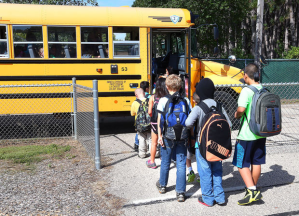
busThe road to hell is paved with good intentions. This fundamentally conservative adage has haunted efforts to break down racial barriers to public education in America. When impatience with the slow pace of school desegregation reached its peak in the seventies, liberal activists began a campaign fraught with unintended consequences.

Forget about taxes or abortion or immigration. Today’s Tea Party anger has its roots in the accidental destruction of public schools and the local communities they supported through the well-intentioned plans of the American left.

Forced busing changed the character of the Civil Rights Movement in ways that would destroy any hope of linking the fates of low income whites and blacks. Campaigns to end segregation of lunch counters or hotels may have offended hardened racists, but the material cost to whites was minimal and the economic importance to oppressed black communities was enormous. Forcibly breaking up community school districts was an entirely different matter, with implications for whites and African-Americans that no one outside those communities anticipated.

School desegregation campaigns begun in the ‘70s were justifiably perceived as punitive and imperial. Punishment fell most harshly on lower-earning, white working families, people who had accumulated the least advantage from centuries of racism. Meanwhile, wealthier white communities escaped from forced desegregation almost entirely untouched.

Schools that had acted as the glue holding white communities together were destroyed. Schools that acted as the glue in black communities were destroyed right along with them. There were no winners, and the losers did not deserve their fate.

When the campaign was finally abandoned our public schools were more racially segregated than they had ever been. To make matters worse, now those schools and the communities around them were also intensely segregated by income as well. The quiet compact that once held white communities together was broken and working whites were left to fend for themselves.

Majority black school districts left behind by white flight have not only been stripped of most of their financial resources, they have been captured by the patronage engines that dominate urban politics. Black students in the nation’s wealthiest cities attend schools that exist for little public purpose beyond promoting the power of a partisan political establishment.

And what happened to lower income whites unable to flee into better schools? Take a close look at mortality rates for whites who came of age during this period and failed to receive an education. By the ‘90s the ‘shadow welfare state’ which for centuries had offered protection to low income whites on the basis of their race had been irrevocably smashed. Middle and lower income whites, especially in the South, have reacted as you might expect, with a desperate rear-guard effort to rebuild white supremacy. If you want to know where we got Sarah Palin and Ted Cruz and Donald Trump and the Tea Party, you need to have ridden a school bus in the ‘80s.

Beaumont

Beaumont is a mid-sized refinery town in the coastal swamps of East Texas. Socially, the area bears more resemblance to Youngstown or Toledo than to Dallas. The only union-dominated corner of a union-hostile state, Beaumont until the ‘80s was relatively liberal, racially-mixed, and industrial-minded.

For all its uniqueness, the town is surrounded by East Texas and that wider geography matters. Its first neighbor to the east is the notorious “sundown town” of Vidor, dominated by the KKK long after the group lost its relevance elsewhere. The town’s character would begin to break down when racial tensions rose. Today, Beaumont is another relic of industrial decay, resegregation, and blue collar malaise. What happened to Beaumont can shed light on the deeply mixed legacy of the late Civil Rights Movement. In the process, it might also serve as a caution to ambitious crusaders willing to compromise basic civil rights to achieve Civil Rights.

Insufficient Progress

Beaumont was never Little Rock. In fact, the overwhelming majority of southern communities were not like Little Rock, or worse yet, Boston. Though no beacon of racial amity, the town showed little interest in preserving Jim Crow. When in 1962 Rev. Edward Brown filed suit to invalidate the main school district’s race-based admissions policies, the district simply gave up. They announced a plan to drop race-based admissions one grade at a time in 1963, then just dropped formal segregation altogether.

Most Southern whites, especially in Texas, wanted no part of the tragic displays of racial hatred they saw playing out across Dixie. By the 70’s, the prevailing attitude of whites in Beaumont to questions of desegregation was exhaustion. Sick of being reviled by high-minded outsiders and being bullied by racial terrorists, they wanted the matter resolved. Many of those communities would encounter a complex obstacle as they sought to disentangle themselves from the legacy of Jim Crow.

Neighborhood public schools are a hallowed American tradition. There is a special strength that comes from multiple generations of involvement in a core set of educational institutions. Schools where many of the teachers and administrators were once students and where mom once wandered the halls not only add richness to an education they create bonds that reinforce a sense of community. Though desperately underfunded and poorly treated, the same community-building dynamic was at work in schools created in and by the black community.

When trying to desegregate a neighborhood school, the trouble is the neighborhood.  Creating ‘open enrollment’ in Beaumont allowed people to attend the school of their choice, but both black and white families tended to choose a school in their own neighborhood. North or south, most American neighborhoods in the ’60s were explicitly segregated. Beaumont was no exception.

Beaumont started out by trying to redraw school boundary lines, but the effort accomplished little in either direction. Whites re-zoned into traditionally black schools either chose different schools or moved. Black families also remained mostly attached to their neighborhood schools. By the late ’60s the Federal government was taking a far more activist approach to the issue and local options were drying up.

In 1974 the 5th Circuit rejected Beaumont’s efforts at voluntary desegregation. Not enough black students were attending the two traditionally white high schools (which were 24% & 14% black, respectively) and no white students were attending the district’s traditionally black school.

It is important to recognize why desegregation was the solution of choice for civil rights activists outside the community. Efforts to achieve equitable funding, resources, and basic respect for black schools were failing almost universally. By breaking down the racial organization of public schools, liberals expected to gain for black students access to the same resources that communities were reserving for whites.

This conclusion was not unreasonable, but there was no practical way to implement such a strategy without systematically dismantling neighborhood schools. Achieving that objective would mean reaching federal power deeper into the personal lives of American families than we had ever done before.

This would be federal power exercised in local communities, not to provide new resources for the poor or expand healthcare, but to break up an institution at the heart of community identity. When the true implications of this strategy are taken into account, it becomes clear that other options, including direct federal financial support for minority schools, might have been a more prudent next step. In the late stages of the Civil Rights Movement, both prudence and patience were running short. Reformers were developing an appetite for retribution.

For the next twenty years Beaumont schools would operate under the supervision of a Federal Judge.  Neighborhood schooling and the system of public education in general would be deeply, perhaps irrevocably, damaged.

We’ve Come to Help You

Those decades of heavy-handed social engineering all over the country would make Republicans out of Democrats, drain cities of white families with school-aged children, and create the suburb as we know it today. They would also fail utterly in their goal, with schools in many places ending up far more segregated than they were when the effort began.

Middle and lower income whites’ children became pawns in this game. They were shipped all over their respective towns to provide a moving racial shield for wealthier white neighborhoods. In response they became more politically activated than ever before and would shift their traditional party loyalties. Lower earning whites developed a sense that the Constitution no longer protected them from government interference in the way they had always expected it should. They learned a deeply emotional lesson about the power of government and the willingness of well-intentioned bureaucrats to screw them over without remorse.

But perhaps the most tragic casualty of this process was its most ironic.  The busing saga devastated black communities.

Collateral Damage

Beaumont’s Charlton Pollard High had a rich history and deep community roots.  What should be a proud tribute to what African Americans were able to achieve against a backdrop of discrimination, abuse and outright violence is now lost. Hardly anyone left in Beaumont could point out the location of the old Charlton-Pollard campus. The name no longer hangs over a school door, a sad legacy of a failed judicial experiment.

The school that would become Charlton Pollard was founded in the 1870’s by freed slaves who recognized the need for schools to serve the black community. With no government help and against tremendous, sometimes violent resistance, they built an institution to provide a critical service. Administration of the school was picked up by the city in 1883 and two formal wooden school buildings were completed in 1900. In 1925 the first brick building was constructed.

Charlton Pollard, underfunded, neglected and poorly served by the white-dominated school board that controlled it remained an anchor in Beaumont’s black community. When the Federal courts took control of the schools in 1975, its destruction began.

Under pressure from the Justice Department, BISD merged Charlton Pollard with the venerable old Beaumont High, mostly white at the time. Beaumont Charlton-Pollard, or B-CP, as it was known, began its short career in ’75 as a liberal political experiment. District officials began looking for whites they could ship to the new forcibly-balanced schools.  They needed people with the weakest political sway and the least ability to pay for private alternatives.

They found them in blue collar white neighborhoods.

Unravelling

A strategy was carefully constructed to protect the few elite schools still available in Beaumont; the ones distant enough from majority-black areas to be insulated from integration. For decades that strategy worked, allowing wealthier white families a valuable escape from desegregation.

By 1981, with whites already fleeing the city en masse the process reached the peak of absurdity. Beaumont’s other more affluent school district, South Park, was forced to make individual students’ school assignments by drawing colored ping pong balls in a lottery. South Park’s lone black school board member, Richard Price, summed up the white-flight problem with the observation, “We don’t have any black flight.  Blacks can’t fly.”

Whites in Beaumont with any means steadily fled, either into the one small, but now booming Catholic school, or into the galaxy of small storefront institutions thrown up hastily by Fundamentalist churches (where the Earth is 6000 years old…). Beaumont’s middle and low-income families waited eagerly each summer for judges to decide which new part of town they would be exploring when school started.

In 1986, Beaumont Charlton Pollard would lose the last vestige of its freedmen’s heritage as the whole campaign began its final phase.  The name was dropped altogether as some of the city’s least successful schools were amalgamated into a new entity on the campus of the old Beaumont High.

Beaumont would shrink for a time to only two high schools. West Brook was constructed out of the wreckage of the more affluent South Park school district. It was tucked away on the farthest reaches of the city’s suburban west-end where it could have the best chance of staying white. Black students and low income whites were concentrated into the suitably industrial-sounding, Central High.  Charlton Pollard was finished off and buried beneath Central High.

The Aftermath

The busing effort in Beaumont is dead now.  It was finally abandoned in the ‘90s. Charlton Pollard still holds reunions, though fewer and fewer in the community remember its rich history.

Central High School, my proud alma mater and distant heir to the Charlton Pollard legacy, is now entirely black. West Brook High, engineered as a shelter for white-collar west-end professionals, remain majority white until just a few years ago. Neighboring suburban high schools like Nederland, Port Neches and Lumberton are overwhelmingly white to this day.

Meanwhile, the neighboring town of Vidor, with its long, overt, legacy of KKK control, was untouched by the whole process. Its schools are still whiter than the milk on your cereal.

The project failed to achieve any of its primary goals. Beaumont public schools today are not only segregated racially, they are crippled politically. As in other large urban districts elsewhere in the country, a pool of struggling students left behind by the political establishment become food for opportunists.

Schools in Beaumont exist primarily to distribute tax money to those who have the political heft to grab it. Recent FBI investigations have targeted millions fleeced from the district by a corrupt administration, but low income families lack the political influence to clean up the district. Robbed of more powerful allies by the demolition of local communities and the flight of the more affluent, families who cannot or will not leave Beaumont do they best they can to get an education for their children against terrible odds.

At a wider level, we now have a whole generation of Southerners who received their education, such as it was, in an atmosphere of complete racial and academic turmoil. The network of neighborhood support that sustained the schools was demolished in both black and white neighborhoods leaving them weaker and less cohesive. Though the quality of the students’ educations undoubtedly varied, we know they learned one certain lesson. You better not come between a liberal and his dream for your improvement. We shouldn’t be surprised at the politics this has inspired.

After the busing era, populism espoused by Bernie Sanders is a non-starter with working whites while populism espoused by the Tea Party and Donald Trump sets the South ablaze. Poor strategic decisions in the late stages of the Civil Rights Movement taught working whites that their best path to protection lay not in economic justice promised by the left, but in white nationalist activism offered by the paranoid fringe right. When they abandoned the Democratic Party they brought that white nationalist fringe into the center of Republican politics.

America’s attempt to right 300 years of oppression in a single, impatient, quasi-imperialist project is a warning to a new generation of liberals – one they will almost certainly disregard. Culture matters. History matters. Rights and justice matter, even when we are talking about the rights of a group that enjoyed many ill-gotten privileges. Injustice in the name of justice is injustice.

Our craving for a clear narrative, a simple story of good guys defeating bad guys, became our own worst impulse in the late stages of desegregation. We faced a complex picture with the interests of many innocent, vulnerable people irrevocably at odds. Sometimes the patient prudence taught by old-fashioned conservatives slows our efforts to achieve social goals. Sometimes it should.

Sometimes the frustrating insistence on process, rights and heritage is a crucial force protecting civil society from disintegration and toxic distrust. Caution has its place, even when the objectives it delays are valuable.

Here in the first quarter of the 21st century we are on the cusp of a major generational transition; a new wave of liberal reform probably larger than any we have experienced in the past. The outcome may be equitable, happy and prosperous if this rising generation retains some respect for community and tradition. Our still-segregated and badly damaged schools have lessons to offer tomorrow’s ambitious reformers.

Tagged with: , , , , ,
Posted in Civil Rights

Update on our Trump Collapse Pool

Back in July we launched a pool to guess when Donald Trump’s campaign collapses. The winner or winners would receive their very free copy of The Politics of Crazy.

Those who predicted that Trump would soldier on through the convention and beyond are starting to look better and better. Here’s an update on the results so far:

Turtles Run 1-Aug-15
Ivar 6-Aug-15
flypusher 13-Aug-15
menaartgallery 14-Aug-15
JeffAtWolfCreekMicro 26-Aug-15
easyfortytwo 27-Aug-15
fiftyohm 3-Sep-15
stephen 7-Sep-15
ANON 16-Sep-15
Griffin 17-Sep-15
Ronjan 21-Sep-15
2keeplearning 11-Oct-15
Kebe 15-Oct-15
texan5142 16-Oct-15
way2gosassy 20-Oct-15
Chris Ladd 1-Nov-15
Ryan Ashfyre 10-Nov-15
Firebug 21-Nov-15
Treeman 1-Jan-16
pbasch 15-Jan-16
James Montgomery 1-Feb-16
johngalt 10-Feb-16
the4thpip 15-Feb-16
dowripple 29-Feb-16
lomamonster 29-Feb-16
objv 9-Mar-16
Harley 15-Mar-16
David 17-Mar-16
Hans Messersmith 22-Mar-16
1mime 1-Apr-16
tuttabellamia 1-Apr-16
CarolDuhart2 2-Apr-16
RightonRush 30-May-16
Doug 8-Jun-16
Anand Rangarajan 1-Jul-16
csarneson 1-Jul-16
Tom 18-Jul-16
briandrush 18-Jul-16
Gerrit Botha 18-Jul-16
jwthomas 18-Jul-16
vikinghou 21-Jul-16
Cpl. Cam 13-Oct-16
EJ 25-Oct-16
Rob Ambrose 8-Nov-16
n1cholas 9-Nov-16
Houston-stay-at-Homer 2-Feb-17
Mark Maros 9-Nov-16
duncancairncross 15-Nov-16
Posted in Uncategorized

Republicans’ demographic trap on display

Voters in Houston yesterday rejected a city ordinance that would have allowed perverts to molest little girls in public bathrooms with impunity. At least that’s what your grandmother’s Facebook post said. You are skeptical of Nana’s consistently batty claims, but you didn’t even know there was an election happening and you didn’t vote.

Yesterday’s results all over the country demonstrated the strange demographic trap tightening around the Republican Party. We are growing ever more dependent on aging white voters motivated primarily by fear of white cultural decline. Their uniquely paranoid interests and committed voting habits have temporarily boosted Republican power in many low-turnout state and local races while simultaneously locking the party out of the White House for the foreseeable future.

One statistic defines better than any other the shape of Republicans’ demographic trap. Voters over 65 are almost 20 times more likely to vote in local elections than younger voters. This creates a strange oscillation in election results. Turnout across ages and demographics converges in Presidential Election years as publicity and interest drive engagement. Meanwhile your grandmother, with her terror of that Muslim Fascist Communist Obama, is waiting at the polls when the doors open the following February and June and September and so on.

This has created a strange and unusually dangerous dynamic, best seen in the radically different results in and out of Presidential election years. We are settling into a pattern, likely to continue for a few more cycles, in which Democrats win crushing victories every four years while Republicans celebrate a faux “resurgence” in the meantime. With each passing year, the Democratic Presidential advantage grows wider while the Republicans’ off-year bump weakens.

Political parties go where their supporters take them. A massive influx of Southern conservatives worried about the end of segregation fled the Democratic Party in the last quarter of the 20th century, filling up a previously empty Republican grassroots infrastructure there. Their influence has tipped the balance of power inside the party nationally, suffocating Northern and urban commercial interests that defined the organization from its origins. That electorate dominates Southern politics and their influence has shifted local power, for a while, in rural stretches of the North and West. And they are dying off.

This is not only true of the oldest cohort. The Southern Republican base in the next age cohort down is experiencing unusually high mortality rates. Younger voters are increasingly urban, ethnically diverse, socially liberal, and irreligious. They are growing more hostile to a GOP that fiercely rejects their voice and their values at every turn. Yet the impact of this trend is muffled for the time being by patterns of turnout in off-year elections like the ones held yesterday.

Declining impact of the off-year bump has probably already doomed the brief Republican resurgence in Pennsylvania and Maine. By 2018, demographics will probably cost the party control in Wisconsin, Virginia and North Carolina. If this dynamic continues without a major Republican change of direction, the critical 2020 elections, likely to determine Congressional maps for a decade, should finish off the party in Ohio, Iowa, Nevada and Colorado.

As this demographic trend plays out we are approaching an inflection point beyond which the voting behavior of our oldest cohort is likely to shift. A large portion of today’s most active cohort was born before 1950, but they are dying off very quickly. As more and more of our oldest cohort consists of people who came of age after the end of Jim Crow and the rise of women’s’ rights, their attachment to the politics of bigotry is fading. Sometime over the next few elections we are likely to experience a sudden and otherwise unexplained failure of dogwhistle politics among our oldest voters.

Despite consistent warnings from analysts like Whit Ayres, Republicans are as blind to this trend as they are to climate change, evolution, or gun deaths. A thick blanket of ideology and a carefully constructed media bubble protects them from the mounting cognitive dissonance. Losses in high turnout years are explained by loony fantasies about election fraud or the 47%. Meanwhile, the placement of most state and local elections in off-years creates a comforting, if temporary narrative of success.

Needless to say, nothing is stopping Republicans from escaping from this trap. Nothing, that is, except for Republicans. One of the consequences of a strategy focused on demographic concentration is a critical absence of variety. Ask anyone who understands evolution and they will explain the impact of declining diversity on survival. With fewer and fewer dissenting voices available the party has little capacity to change course, regardless of outcomes.

By some means, the Republican Party must find a new pool of support. Ironically, the party’s own concentration on an aging, rural, white electorate has created a large number of alienated voters who often vote Democratic while holding their noses. Someone needs to reach them. For now, no one inside the party seems to know how.

In the meantime, the GOP is counting on your sweet Nana to turn out to vote and stop Communists from turning schoolchildren gay. Her delusional fears will block any reasonably sane efforts to adapt American politics and government to new demands. More importantly for Republicans, our comfortable dependence on her fear will stymie efforts to build an environment in which business and capitalism can continue to thrive in a new century, setting up the potential for decades of liberal dominance to come.

Tagged with:
Posted in blue wall, Blueprint for Republican Reform, Election 2016
Goodreads

Enter your email address to subscribe to this blog and receive notifications of new posts by email.

Join 448 other subscribers