A Republican Red Wedding

Let’s be honest – there was no winner of the Iowa Republican Caucus. Now that we’ve moved beyond polling to cast actual votes, we can see that the race is impossibly deadlocked and unlikely to clear.

Barring some extraordinary collapse we can be very confident that no candidate will pick up a clear majority of the delegates to the Republican convention. Thanks to some brilliant rule changes there are very few true winner-take-all primaries ahead. The math is relentless.

That would all change if lots of these also-ran candidates (like, you know, Jeb Bush) dropped out. But there’s good reason for them to stick around. Those reasons relate to the structure of the convention.

With no one securing the nomination via delegate math early in the primary season you start looking to the convention to select the nominee. That doesn’t necessarily mean that there will be a fight on the convention floor. In theory it should be possible for someone to make a deal prior to the event. However, a number of factors make a convention fight more likely.

This is not 1976. The major contestants have no interest in preserving the dignity, authority, or even the survival of the Republican Party. Cruz or Trump would be entirely content to blow up the GOP to achieve their personal goals. By the time we get to April, the prospect of Cruz, Trump and Rubio working together toward a sane outcome seems beyond unlikely, bordering on ludicrous. This gets to the reason why the also-rans might stay in the race.

A vast majority of convention delegates will be “soft-pledged” to a candidate based on primary or caucus results. That means they are only obliged to vote with that candidate on a first ballot. When no one secures a majority on the first ballot, they are free agents.

So, how does the convention resolve a deadlock? Go back and watch the Red Wedding from Game of Thrones.

Once the majority of delegates are turned loose from their nominal obligations, their only remaining loyalty is to the party. Remember, all across the country people securing seats at the convention, regardless of who wins a primary, are generally long-time party volunteers, local elected officials, and other folks with significant ties to the organization.

This is where those neglected candidates like Bush, Christie and Kasich might get a chance to play, especially if they were able to get a few delegates seated. If we scrapped the whole primary process and let Republican donors, lobbyists, officeholders and party officials select the nominee, who would they pick? The answer to that question becomes the nominee (and VP) in a contested convention.

If Trump fails to win a solid majority of committed delegates there is absolutely no way he can become the nominee. And accumulating such a delegate lead seems mathematically impossible.

Cruz faces similar headwinds, but he is likely to have much better quality delegate support than Trump (see explanation here). The party might tolerate him to stave off a revolt from the right, while chaining him to a relatively moderate VP like Kasich or Christie. This seems like the most likely outcome at this point.

There remains a significant possibility that the party exercises its own revolt at the convention; a revenge of the establishment. This ‘Red Wedding’ scenario could see the party purge the insurgents entirely, putting someone like Rubio at the top of the ticket and giving the far right the finger. There is only one reason to do this – because Bernie Sanders is winning the Democratic nomination.

If Clinton is sailing away with the Democratic nomination, the Republicans have no reason to risk the damage of a purge. No Republican is going to beat Clinton and Republican insiders generally understand this. If Clinton is the nominee then they have every reason to let Cruz (but not Trump) take the nomination and lose in a landslide.

A Sanders nomination changes the logic. That race becomes not only winnable, but a near-lock for any Republican who isn’t a raving idiot. Republican insiders will be willing to alienate Cruz’s supporters, daring them to sit out the race and elect a socialist. Sanders is just what Republicans need to restore a little pragmatism to their electorate.

At the end of the day, those who are most invested in the party will choose its nominee. Unless someone streaks ahead, we probably face a contingent outcome. If the Democrats nominate Clinton, the Republicans will probably let Cruz have the nomination at the convention. If it looks like Democrats are going to open the door for a Republican to win the White House by nominating Sanders, then look out. The scene on the convention floor in Cleveland will be bloody. Probably the walls, too. Viewer discretion is advised.

Tagged with: , , , ,
Posted in Election 2016, Uncategorized

Link Roundup, 1/31/2015

From Quartz: Go home, coyote. You’re stoned.

From Texas Tribune: Governor Abbott still determined to lynch Planned Parenthood.

From The Atlantic: The Politics of Crazy is finally catching up to the Democrats.

From the Daily Dot: Reminder that some people have real problems. Bangladeshi blogger explains why he had to flee the country.

YCombinator is soliciting research on a Basic Income.

From the The Onion: Clinton Ominously Tells Iowan Supporters To Mark Front Doors With Campaign Logo Before Sundown

Posted in Uncategorized

Mind the gap in Iowa

As a stepping-stone to the GOP nomination the Iowa Caucus is a consistently overrated event. This season may be different. In 2016 the caucus takes on unusual importance as our first gauge of the durability of Trump’s campaign.

One metric more than any other is worth watching on Monday: the gap between Trump’s polling average and his Iowa results.

Historically, the polling leader in Iowa under-performs significantly in the caucus itself, unless he is a religious conservative. The favorite candidate of religious conservatives in Iowa out-performs his polling average by almost a quarter, stretching back a generation.

Being a caucus rather than a primary, and being scheduled in the depth of a Northern winter, Iowa results hinge heavily on a combination of commitment and preparation. Religious conservatives are the only Republican constituency with consistently high levels of grassroots participation, discipline, and organization. And they are the core of the GOP in Iowa.

With those factors in mind Cruz should out-perform his poll numbers in Iowa by a significant margin, probably a larger margin than we’ve seen in recent years. Thanks to years of outreach, including an intensive campaign to organize homeschool parents, Cruz has well-trained and vetted precinct captains in every corner of the state. Just about every major Religious Right figure in Iowa has endorsed him.

Trump’s grassroots organization is a train wreck, led mostly by a few paid staff and a small network of 9/11 truthers, white supremacists and other political oddballs. He polls well among evangelicals, but he hasn’t done much to channel that support into an organization. Voters most enthusiastic about Trump are people who can’t be counted on to tie their own shoes, much less show up at a particular location in the snow by 7pm Central. The most active and prepared fundamentalist voters in Iowa are, for the most part, committed to Cruz.

There is talk, mostly from Trump’s campaign, that his campaign will attract a throng of new voters and Democrats. It isn’t clear where those new voters are supposed to come from. Iowa’s population is stagnant. Participation in previous caucus has been at a high-water mark. Aging, rural, Democratic racists have been presented a lot of opportunities to switch parties in recent years. There aren’t many left at the end of the Obama Administration. And a tight race on the Democratic side should prevent them from crossing over just to troll.

This gap in organization and basic capability is the last firewall insulating the GOP from a Trump win. If Trump’s supporters, in numbers consistent with his polling, can actually show up to Iowa caucus sites on time and then write his name legibly on a piece of paper, then there’s probably nothing stopping him from racking up enough delegates to earn the nomination.

My expectation is that Cruz will win Iowa, finishing 3-5 points ahead. That guess assumes that Trump’s bizarre Megan Kelly tantrum weakens him slightly going into the caucus. Trump will win New Hampshire. The two will finish one and two in South Carolina, then they will split all but a handful of the March 1-8 contests. With a close race between them, punctuated by a few wins by Rubio or another candidate, the stage will be set for neither Trump nor Cruz to amass a clear delegate majority. Cruz, by virtue of far superior organization and far more capable delegates, would win a close fight, either at the convention, or in a deal leading up the event.

On the other hand, if Cruz loses Iowa it will demonstrate that the rabble can overwhelm the structural advantages of a well-organized candidate. If that happens we will probably spend the next few months watching Republicans decide how committed they really are to this whole business of participating in a political party.

So, this year’s Iowa caucus probably carries a lot more predictive value than usual. Mind the gap.

Tagged with: , ,
Posted in Election 2016

Police brutality is a blue-state problem

tamirriceIn December, a grand jury in Cleveland followed a prosecutor’s recommendation and declined to indict the officer who killed twelve-year-old Tamir Rice. More than a year after the incident that officer, Timothy Loehmann, remains at work drawing a salary from taxpayers. Cleveland’s District Attorney, Mayor, and Police Chief are all Democrats. The Cleveland Police Chief, Calvin Williams, is black.
Last summer in the Dallas suburb of McKinney, a white police officer was recorded pulling his gun on black teenagers at a pool party. At one point the officer wrestled a 14-year-old girl to the ground with no provocation. The officer’s actions were denounced by McKinney’s Police Chief the very next day. Three days later the officer stepped down. He no longer wears a badge or collects a taxpayer-funded salary. McKinney’s civic leadership is white and Republican.

There is a missing element in public efforts to end the culture of police brutality against black Americans. More than racism is at work in this problem. Black Lives Matter has displayed the courage to challenge the structural racism that subjects black and other minorities to humiliating and occasionally lethal mistreatment by public servants. Yet, neither BLM nor any other major force on the left has mustered the courage to tackle the rest of the problem. As a consequence, their efforts to date have generated nothing but heat.

Police brutality as a structural issue grows from two sources: racism and an absence of accountability. Red states are rich with racism, but the relative weakness of their public employee unions leaves open a potential path to accountability. For all the racism that plagues Southern states, police there are less likely to mistreat black citizens and far more likely to face discipline when they do.

Our largest, oldest urban areas have a long history of entrenched union power. No force at the state or local level possesses the political muscle to hold police (or educators) accountable for any failure to serve the public interest. That fact is reflected in the quality of their public institutions like police and schools.

This is a very simple problem. When a public servant in a place like Oklahoma or Texas abuses the public trust, elected officials there possess the authority to discipline them. In Northern states where government employees are insulated by the overwhelming political influence of their unions, no one has the power to subject public servants to appropriate discipline. Create an environment in which the worst performers cannot be properly weeded out and your bottom ten percent will set the tone for everyone else.

A quick survey of police brutality cases, North and South, makes the problem starkly obvious. Here are a few examples of police abuse in the North with links to the case details and a summary of the outcomes:

Ohio – John Crawford III – Killed by police in August, 2014

Officers in the case were not charged with any crimes. They remain on duty receiving pay. The department still has time to pursue some form of disciplinary action, but will probably decline.

New York – Eric Garner – Killed by police in July, 2014

Perpetrator remains on duty. None of the officers involved in the incident have faced criminal charges or internal discipline. Only one officer is being referred for discipline, a black supervisor who never laid a hand on Garner. Deadline for disciplinary charges has passed. A civilian who filmed the incident is the only person charged with any crime.

Maryland – Freddie Gray – Killed by police in April, 2015

Officers on leave, but still employed and receiving their pay. Police arrested one of the people who filmed the incident. First of six trials of the officers resulted in a mistrial. Interesting note here, three of the six officers involved are black and one is a woman. Apart from a newly elected Governor, every official in the chain of authority all the way to the US Justice Department was a Democrat. All of the local officials, including the police commissioner, were black.

By contrast, a few examples from Southern states demonstrate how justice operates where public employee unions cannot block accountability:

Texas – Sandra Bland – Suicide in police custody after needless arrest in July, 2015

Arresting officer has already been indicted for perjury. Termination proceedings have started. All of the officials involved at the state and local level are Republicans.

North Carolina – Jonathan Ferrell – Killed by police after a car accident in September, 2013

Officer was arrested the next day. He was suspended without pay and charged with manslaughter. Trial ended in a hung jury. City of Charlotte settled a claim with the family of the victim for $2.25m.

South Carolina – Walter Scott – Killed by police fleeing traffic stop in April, 2015

Officer who shot Scott was fired within days. Two months after the incident the officer was indicted for murder. Trial is pending. The state and local officials involved are all Republicans.

These are only a few examples that demonstrate the wider pattern. How this problem actually works on the ground can be illustrated with a look at the union contract that blocks the City of Chicago from disciplining officers.

Officers cannot be charged with perjury unless they were first allowed to review prior statements and other evidence, making a perjury charge (as in the Bland case) virtually impossible. Officers under investigation get to know the identities of those who will interrogate them. They get to keep disciplinary proceedings private.

Officers can’t be removed from paid status until an arbitration process has been completed. They can even decline a lie-detector without facing any penalty. Most importantly, they get to make their first statement in any disciplinary case in private, with their supervisor. It is virtually impossible to subject a Chicago police officer to discipline without the full cooperation of the department and the union. In other words, so long as an officer does nothing to upset his union hierarchy, they are beyond accountability.

Why do officers in Chicago and other big cities enjoy this degree of immunity while public servants in the South do not? Southern states never developed powerful public employee unions. In the North, unions deliver enough of the political ground game to elect the public officials who will subsequently be on the “other side” of contract negotiations. And state laws force local governments to reach agreements with those unions, effectively blocking any escape. The Democratic Party to which black voters owe unquestioned loyalty is controlled by unions that will always place their own interests above black voters. Checkmate.

Southern states generally lack mandatory collective bargaining agreements and their public employee unions lack the political organization enjoyed by Northern peers. Southern states have plenty of racism, but the public will not tolerate extreme abuses. Much more importantly, the public possesses the power to hold police and other public workers accountable. Voters in Chicago or Baltimore may be less influenced by racism, but voters there have no leverage to hold police consistently or reliably accountable.

If Black Lives Matter is serious about stirring up more than passion, they will have to find the courage to tackle the other half of the police brutality problem. For a movement on the Democratic left, tackling the white supremacy element of this problem is too easy to be taken seriously. There is no major constituency on the left committed to preserving white supremacy.

So far, BLM is still pulling their punches when it comes to public employee unions, reflecting their weakness beneath the surface. The movement is rich in left wing performance art, putting on obnoxious shows at Sanders’ campaign rallies and blocking traffic. Yet their supposedly ambitious ‘Campaign Zero’ amounts to a polite request for police unions to remove contract provisions insulating abusive officers. They’ll congratulate themselves for shutting down the Bay Bridge, but when it comes time to confront a real political powerhouse, they are suddenly flush with pragmatism.

When reformers muster the will to challenge their union “allies” on the left, we may see an opening for real change. That kind of change could open up a new era of prosperity for Northern cities stunted by corrupt and unaccountable public institutions. Unfortunately, it is far more likely that this movement will simply be absorbed into the numbing static of the professional left, filling a booth between Code Pink and Occupy Wall Street at a future progressive bloggers convention. That would be a loss for all of us, left, right and center.

Tagged with: , , , , , ,
Posted in Civil Rights, Uncategorized

Link roundup, 1/19/2015

From The Atlantic: Donald Trump’s surreal visit to Liberty University, where he was compared to Martin Luther King and then botched the scripture message.

From The Daily Dot: This is what a war looks like now.

From the Washington Post: Marijuana doesn’t make you stupid.

From Noahpinion: More on a subject we’ve been discussing at length; how the left talks about race.

From Gizmodo: Another example of why China is not quite ready to be a dominant economic power.

From Wired: How car companies like Tesla are preparing the way for driverless cars.


Posted in Uncategorized

Only Democrats can send Trump to the White House

While Republicans celebrated their victory in the 2014 midterm elections, a nasty surprise was hiding in the numbers. That election marked a tipping point in a disastrous demographic transition initiated and driven by the GOP itself.

A decades-long focus on interests of a declining white electoral base had effectively walled Republicans off from access to the White House. Democrats now solidly controlled a large enough block of Electoral College delegates that any conventional Democratic nominee would have a lock on the White House for the foreseeable future.

Republicans might roll out the most outrageously dangerous figure conjured from imagination and no one need be concerned. Behind the strength of a demographic Blue Wall built by Republicans, any remotely credible Democratic nominee would win in a walk.

Never underestimate the ability of the Democrats to exploit a caveat.

Whatever you might think of George W. Bush, Sarah Palin, or Ted Cruz, it is vital to remember that Democrats have played a crucial role in every major catastrophe we have experienced. Financial deregulation that nearly destroyed global capitalism under Bush was launched by Clinton. Our invasion of Iraq enjoyed overwhelming Democratic support. Bush’s devastating tax cuts passed with Democratic support. Now they are threatening to do it again.

As Republicans prepare to assemble the most wildly incompetent Presidential slate in modern American history, we might all be tempted to take comfort from the Democrats’ seemingly insurmountable Electoral College lock. Frightening as the Republican nominee might be, at least the crazy bastard can’t win. It is time for the Democratic Party to demonstrate its super-power – finding a way to lose.

Somewhere in the semi-lit back rooms of the Senate they found a decrepit Hippie from a state no one can find on a map. The guy, who apparently can’t afford a comb, isn’t even a member of their party. Now he is heading into the first primaries with a lead in the polls over the Democrats’ only credible contender.

For Republicans like yours truly, and there are more of us than you think, voting for another wretched Clinton was going to be a bitter, bitter pill. Anyone with a grown-up’s sense of obligation would have felt compelled to support Clinton over some dangerous Republican loon. There is something oddly liberating in being freed from that threat. If Democrats don’t feel that obligation, then why should I? When the Democrats nominate their own random nutjob, that sober duty to cross party lines in the public interest disappears.

If you think that Bernie Sanders is going to enjoy broad support from people who previously voted for Bush, McCain or Romney, then you are an idiot who fully deserves to endure eight blustery years of the Trump Administration. As the nominee, Sanders will break the Blue Wall in a way no Republican could have hoped to do.

Go back and look at three or four of the posts on this blog. Then digest this tidbit: The guy who wrote those posts will not vote for Bernie Sanders under any circumstances.

Then ask yourself this question: If the guy who writes the GOPLifer blog isn’t going to vote for Sanders, what Republican will? Much more importantly, when lily-white “progressives” disregard the preferences of black voters – yet again – how many of those voters are going to tow the line in November? How many of the young Asian professionals who used to vote Republican, but supported Obama, will vote for Sanders?

How many of the tens of thousands people who voted for both Scott Walker and Barack Obama in Wisconsin are going to vote for Bernie Sanders? How many of the voters who elected Republican Governors in Maryland and Michigan while also supporting Barack Obama, John Kerry, and Al Gore in previous elections are going to support Bernie Sanders?

Answer: Not enough of them to predict an outcome against even the craziest potential Republican nominee.

Republicans do not have the electoral heft to put Donald Trump, Ted Cruz, or even Marco Rubio in the White House. Only Democrats can do that. So far, it looks like they are on their way to doing what they do best.

Tagged with: , ,
Posted in Election 2016, Uncategorized

Politics of the past

Submitted for your consideration:

Grassroots activists in both parties are determined to nominate a candidate who will roll back fifty years of American history and do it all differently.

Polls show that the race for the Republican nomination is a two-man contest between Ted Cruz and Donald Trump, with any remotely credible leadership figure trailing hopelessly behind. Meanwhile Democrats, displaying their gift for converting opportunity into disaster, seem to be turning toward Bernie Sanders who has risen to a solid lead in Iowa and New Hampshire.

Nothing in the agendas being offered by Trump or Sanders would have been unfamiliar to voters in western democracies in the 1930’s. Their speeches have that warm sound you get from a five-foot tall, lacquered-wood AM radio.

Want to know how we should respond to an interconnected world, driven by lightning-fast innovation, generating wealth on a scale never before seen? Want to know how we can adapt creaking, archaic institutions to the demands of a knowledge economy? No, of course not.

We want to know how professional political entertainers are going to soothe our fears and insulate us from change. We want to know how to make America American again and keep the rest of the world at bay.

Both candidates are promising to stop American jobs from going to China, without recognizing that those jobs are disappearing from China just as quickly. Both candidates want to shut down the growing global trade that has enriched this country in order to “protect” jobs that do not exist and will never exist again. Neither party’s base candidate has a word to say about making the new economy work for everyone. Instead, they are proposing to saddle it with obstacles that it will simply outmaneuver, leaving the rest of the country behind.

Bernie Sanders is actually promising to replicate in America the worst health care system in Western Europe – single payer. Trump has supported exactly the same plan. Sanders’ “progressive” jobs program is exactly the same as Roosevelt’s. Both parties are embracing candidates who want to wall off America. Trump and Cruz get a lot of attention for promises to build a physical barrier on the border, but Sanders’ legal walls against trade will do far more to impoverish ordinary Americans than any fence.

Look past the difference in rhetoric and you’ll discover that both campaigns are promising to stem immigration. Both campaigns are promising a country more isolated from the rest of the world; a country that prioritizes fearful protection over innovation. The central appeal of Donald Trump, Ted Cruz and Bernie Sanders is a return to a defensive America, determined in their own way to implement your grandfather’s policy template to fight the future. They are the same product with different commercials.

Will our political dysfunction dismantle this new economy? No, it absolutely won’t. What we’ve learned from the rise of Uber, as just one example, is that the institutions best able to adapt will survive and grow more powerful while slower, dumber institutions will shrivel up and fade. Neither Trump, Cruz nor Sanders will not stop the emergence of this new, faster, smarter, wealthier economic order. The failure of our political institutions to adapt to these new demands only means we’ll lose our best opportunity to make this new economy work to the widest benefit.

Failing to adapt means that the knowledge economy will continue to pull away from the rest of America and the world. Those fortunate enough to earn a place there will live in a dynamic, diverse, ridiculously lucrative economy while the rest of the country falls farther behind. Try to stop this progress with unions or trade restrictions or border walls, and the architects of the knowledge economy will just drive around these anachronistic obstacles.

It would be nice if we could have a less feckless version of Marco Rubio, someone capable of recognizing what we’re living through, courageous enough to talk about it, and smart enough to propose policies that would harness rather than fight this new economy. We don’t, mostly because that kind of approach would probably have to come from the Republican Party, which is a frighteningly dysfunctional mess. Maybe we can get something like that in 2020 or 2024.

In the meantime, the base of both parties is proposing to rerun an election from the 1930’s. It’s a great year for history buffs, but a tough time for people who want their government to embrace the future.

Tagged with: , , ,
Posted in Election 2016, Uncategorized

Link roundup 1/11/2015

How did Ben Carson’s support evaporate? He expressed doubts about fundamentalist doctrine on the apocalypse and Hell.

The outlines of Ted Cruz’s bold Southern Strategy.

America’s only truly dangerous foreign policy challenge – which no candidate will talk about – what happens to the world when China’s economy craters?

Only a bare majority of Americans still identify with a political party, a new low point.

The Supreme Court will hear Friedrichs today, with the potential to dismantle a miserable 19th century legacy of adversarial, politically active public employee unions.

Posted in Uncategorized

A survey of Trump’s Illinois delegates

pocA few weeks ago I speculated that the Trump campaign would fail to submit a full slate of delegates for the Republican primary in Illinois. On Monday, he beat the odds and delivered a complete application…sorta.

Judging from the ragtag and slightly bizarre collection of delegates the campaign has designated, his signatures might warrant scrutiny. However, if his petitions stand up to review then this process deserves serious attention from political researchers. What Trump has accomplished here is remarkable in ways that extend far beyond his own campaign. Say what you want about the man and his message (Lord knows I have and I will), but this may prove to be a watershed moment in the democratization of our system and the expansion of The Politics of Crazy.

A little background might be helpful. In Illinois, the candidates themselves are not on the primary ballot. Primary voters in each of Illinois’ Congressional Districts select three delegates who are individually committed to each candidate. In order to be represented, a candidate must recruit three delegates who will obtain the requisite number of qualified signatures in their Congressional District to appear on the ballot. Highest vote earners in each district will become delegates to the national convention.

This is no simple feat. As the Republican field has grown in recent years to include political entertainers and assorted nutjobs, candidates regularly fail to appear on the ballot here. The filing deadline is today and only Bush, Cruz and Trump have submitted a full slate.

In practical terms, Illinois’ petition structure forces national campaigns to work hard early to obtain support from local political figures all over the state. Candidates for County Board, the State Assembly or other state and local offices already have teams at the precinct level (like yours truly) dividing up the work of petitioning. State and local politicos agree to sponsor a Presidential candidate’s petition effort in return for a deeply coveted opportunity to attend the national convention as a delegate.

That’s the model followed by all of the other Republican campaigns in this cycle. Trump was not able to exploit this well-worn route. Frequent (if half-hearted) appeals from local GOP leadership for someone to step up and assist with signature collection for Trump failed entirely. No one with any political heft whatsoever was willing to be associated with the guy.

Companies will help with this process for a modest fee, but paid petition circulators in Illinois have a miserable track record of reliability. It isn’t clear yet whether the Trump campaign used paid circulators, but given the absence of any grassroots support and the…let’s call it “unconventional” nature of the delegates that emerged, it seems likely that at least some of the work, especially in Chicago, was paid. Nevertheless, even a commercial petition gatherer probably couldn’t have helped the campaign get over the hump on a statewide basis in such a short period.

True to form, proposed delegates from the other campaigns are mostly public or semi-public figures, easy to identify. My state senator is a delegate for Jeb Bush. My state rep is a delegate for Christie. Not all of the delegates are elected officials, but they are generally prominent local political figures.

Then, there’s Trump’s list.

Only two of Trump’s 54 delegates are elected officials. One is the mayor of a single-stoplight country town. The other, his state campaign chair, sits on a downstate community college board. There are also two figures from the financial community in Chicago, including a former Board of Exchange President. Then it gets interesting.

If Trump wins Illinois he’ll be sending to the RNC a food service manager from a juvenile detention center, a daycare worker from a Christian School, an unemployed paralegal, a grocery store warehouse manager, one brave advocate for urban chicken farming, a dog breeder, and a guy who runs a bait shop. Elsewhere on the slate, Barbara Kois is a minor Christian author whose blog posts are right in line with the hysteria you’d expect from a Trump voter. Nabi Fakruddin is a low-level suburban politico whose claim to fame is being removed from a local transit board position for “double-dipping.” Bob Bednar ran unsuccessfully to head the GOP in Lake County. He’s about as close as you’ll get in that bunch to an active political figure.

About half of his delegates are more or less unidentifiable from any low-level search beyond the voter rolls. There’s one, a Raja Sadia, who has no online footprint of any kind. Needless to say, that is highly unusual for potential convention delegates.

One possible explanation for this strange delegate slate is that the campaign paid someone to run the process. These folks do generally fit the profile of paid petition circulators. The problem with that hypothesis is that the ones who can be identified appear to be honest to goodness Trumpists.

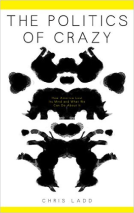
Another explanation seems more credible, though it is also remarkable and perhaps disturbing. In The Politics of Crazy, I explained that a broad devolution of power was weakening our central institutions in ways we never anticipated. Everyone loves democracy, but we are beginning to understand that democracy without effective, responsible institutions is a dangerous mess.

Figures on the left in particular often complain about low levels of political participation and influence by the poor and marginalized in our society. Well, the times, they are a changin.’ If Trump’s petitions are legitimate and these really are qualified delegates, then his campaign has accomplished a feat of democratic activism on a historic scale. Nursery workers and warehouse foremen with no history of political involvement may be on their way to a national convention – and they are not Sanders’ delegates.

The left worries about the alienation of low income and blue-collar voters from the political process. They should be careful what they wish for. The largest movement of grassroots activism by low-income voters in our history is threatening to move a uniquely American brand of Fascism into the political mainstream.

Illinois has one of the most country’s most rigorous standards for ballot qualification. If these petitions prove to be legit, then a ragtag collection of political weirdos just jumped that impressive firewall. We are running out of time to adapt to the demands of decentralization. The Politics of Crazy is toppling dominoes at an impressive pace. Trump may be building a gaudy high-rise over the ruins of our democracy.

***

Quick postscript after the filing deadline. This time around candidates seem to have clued into the complexity of ballot access in Illinois and gotten the job done. Prior to any petition challenges, only four campaigns failed to submit a full slate of 54 delegates for the Illinois primary:

Paul, 44 delegates
Santorum, 11
Huckabee, 2
Gilmore, 1

Still, no one’s delegates are more consistently obscure/odd as the Trump slate.

Tagged with: ,
Posted in Election 2016, Uncategorized

Link roundup, 1/5/2015

Sara Robinson has launched her new blog, Future Imperfect, with an insightful post on the Oregon militia standoff. You may recognize Sara from the comments section here, but she has a long history writing for the New Republic, New York Magazine and other outlets. I’m eager to follow her work partly because she seems to epitomize a force that deserves a lot more attention – the political orphans of Silicon Valley.

Though spread all over the country (Robinson is in Seattle), Silicon Valley is their de facto capital. They share a business orientation that would traditionally push them toward the GOP combined with a left-libertarian social orientation that pulls them toward Democrats. Most today are Democrats, but as our political polls continue to scramble they will increasingly be in play.

Elsewhere in the world:

From Quartz: With tensions growing between Iran and Saudi Arabia, here’s a primer on the Sunni/Shia divide

From The Week: A look at the failing campaign of Rand Paul and its implications for Libertarianism

From Texas Tribune: Four Texas Congressional campaigns with national implications

From Governing: How the growth of performance pay may change public service

From Wired: How US patent issues might affect the expansion of the gene editing technology, Crispr

From The Atlantic: As deep poverty becomes more and more a rural phenomenon, the impact to countryside schools is becoming severe

From Daily Dot: What the family of Tamir Rice plans to do next about his killing

Posted in Uncategorized
Goodreads

Enter your email address to subscribe to this blog and receive notifications of new posts by email.

Join 448 other subscribers