A Next Generation Republican Agenda

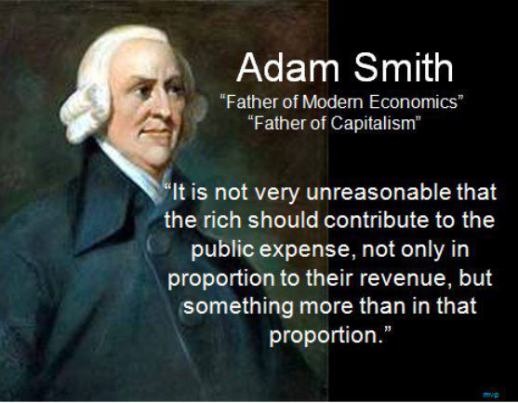
smithAt some point soon, Republicans will be forced to develop a governing agenda built on something other than white paranoia, something with roots in real world problems and an emphasis on practical solutions. Hollow rhetoric that glorifies the rich while blaming our problems on “takers” is far too removed from reality to sustain scrutiny or support policy making.

We need alternatives.  Those alternatives start with a fresh recognition of the most important problems our country faces and the manner in which traditional Republican values can best be applied toward solutions.

Some of those problems are described in more detail here. First, a newly dynamic global economy is radically increasing the rewards an ordinary worker can earn from knowledge-based work. However, it takes a long time for anyone to develop the skills to adapt to that highly dynamic market. Developing a prosperous, stable 21st century economic and political system means opening access to the knowledge economy to as wide a segment of the population as possible.

Second, employment as we have understood it for more than a century is no longer the only or even the most common way to earn a living. A policy environment which is wholly dependent on promoting employment amounts to spitting in the wind. The economy will not produce “jobs” in the traditional sense for everyone who needs to earn a living. Employment has ceased to be a mark of character or success.

Finally, the application of market values to nearly every aspect of our culture is corroding the institutions that support representative government. Our governing institutions are too bloated, too slow, and too unresponsive to meet basic needs in such a dynamic environment. Trying to sustain a bureaucracy-driven central mother-state is racking up costs that cannot be sustained.

By the same token, our private “social capital” institutions are withering. In an intensely market-driven economy, anyone who chooses financially sub-optimal values will be steadily shunted toward the cultural margins. Motherhood, church attendance, and volunteering for example, do not pay well. A pure market economy will steadily and relentlessly eliminate them from social relevance. Political involvement suffers from the same phenomenon. At the moment when we most need to transform our governing institutions, the political structure that supports them is deeply ill from neglect.

We do not have a problem with makers and takers. That’s a self-congratulatory line that allows the affluent to disengage from real problem-solving. Our challenge is a central state which has become too bulky to sustain politically, administratively, and financially.

We can remedy this problem while still preserving the network of social support that makes capitalism survivable. The problem is best addressed by reforming our core institutions to make them lighter, requiring less bureaucratic administration and shifting decisions farther into the personal realm.

Two simple reforms could protect the less fortunate and blunt the impact of market competition on social institutions while encouraging economic dynamism, thus forming the core of a next generation Republican agenda: a fully tax-funded, state-administered private insurance system and a minimum income. Together, these two innovations could end poverty as a political issue while radically reducing the size and scope of the federal government.

They would cost only slightly more in taxes, while reducing the cost most people pay for health insurance and social safety net taxes. And they would open the way for Republicans to begin addressing other reforms that could open up economic dynamism and opportunity for far more Americans than ever before.

The combination of a basic income and tax-supported private insurance would blunt the three main problems we face. It would weaken the power of central state by shrinking the bureaucracy for the first time in a century.

It would give workers breathing space at the beginning of a career, or during gaps in employment, providing a simple means to adapt to market changes. It would relieve pressure on families by supporting a spouse who wants to stay home to care for children. Finally, these reforms would blunt the pressure that is eroding public involvement in voluntary institutions, relieving the winner take all atmosphere is that so severely punishes individual decisions to invest in anything other than commercial activities.

With a stronger, more reliable safety net in place, Republicans would be freer politically to finally reform our tax system. We could flatten and simplify personal rates, eliminating most tax expenditures while bringing corporate rates more in line with global norms.

Republicans could begin to re-establish their influence among urban and minority voters by credibly tackling their most important priority, access to a quality public education. Breaking up the educational monopoly that traps urban students under a blanket of low expectations is the gateway to a new Republican urban agenda. Make urban public education credible again, and city life will be radically transformed, rewarding the party that accomplishes that feat for generations.

The social safety net is an expensive, bureaucratic mess, premised on the assumptions of a 20th century industrial economy that no longer exists. Republicans are right to see it as a target for reform.

However, until Republicans are ready to accept the fundamental importance of the social safety net, we will have no basis on which to rebuild our influence. Instead of working to destroy the safety net, we should make it leaner, smarter, and more effective, taking the entire question of poverty relief off the table while gutting the power and influence of the central state.

Strengthen families and traditional social institutions. Make it easier for a spouse to remain at home to raise kids. End welfare, food stamps and Medicaid once and for all. Remove the central government from its role in deciding, on a case by case basis, who is truly deserving of your tax money and who isn’t.

These are the goals that could free the Republican Party from its ugly quagmire and give it new energy. Don’t expect to the GOP embrace these ideas soon, but as white identity politics steadily loses its luster, this could be the agenda that lets the Republican Party find its feet again as the party of business, prosperity, and entrepreneurial spirit.

Tagged with: , , , , , ,
Posted in Political Theory, Republican Party, Social Capital, Welfare State

Atheists and Theists

A couple of weeks ago I proposed that physicists have essentially stumbled onto the existence of some form of “super”natural reality, and that their discoveries tip the balance of evidence in favor of the existence of a God. Thanks to Andrew Sullivan at The Dish, I found a piece from Walter Russell Mead that sums up very eloquently what that sort of belief in God actually means:

Like [the late Christopher] Hitchens, religious believers look at values like justice and truth and find them to be compelling in their own right. That power is real. But theists also think these values point beyond themselves and tell us something about the way the world is made. The concept of justice isn’t just a product of our evolutionary upbringing, a flicker of sensation in our synapses that points to nothing beyond our conditioning or our genes. Justice claims to be a real value, objectively rooted in something beyond human perception, a legitimate demand on our consciences based on the nature of reality. Theists don’t think that this is a lie.

For theists, the universe isn’t just a place with scattered bits of meaning in it. Meaning isn’t decoration or illusion, a subjective human response to hardwired stimuli in our brains or grace notes that accompany us on our meaningless way through the dark void. Existentialists and others who believe that the universe is ultimately meaningless but who still choose to act as if meaning was real are among the moral heroes of the world, but theists think there is more to life than the brave but doomed affirmation of meaningless ideals in the face of an idiot, uncaring universe.

I highly recommend the whole article. Great Sunday read.

Posted in Religion

Outing gay politicians

Is it wrong to “out” a closeted gay politician? Does that politician’s strong opposition to gay rights affect the ethical calculus?

There has never been any serious doubt in Illinois that GOP Rep. Aaron Schock is gay. No one is likely to be too terribly surprised at the public airing of that fact, reported by a DC journalist. Is it anyone’s business?

Schock was already likely to draw a challenge from the Tea Party in next year’s election. It will  be interesting to see how he handles this publicity and whether it influences that campaign.

Tagged with: , ,
Posted in Uncategorized

First We Must Understand our Problems…

Before Republicans can develop an intelligent platform to address Post-Cold War demands, we have to confront a changing world with clear eyes. The global political landscape has changed dramatically since the last time we gave it a serious look. Many of our new problems spring from previous Republican successes. Failure to recognize them sets us up for a looming Republican calamity.

We live in a world that few Reagan Era Republicans dared to imagine. The defeat of Communism unleashed markets worldwide, bringing vast new global prosperity, but also introducing new challenges. Success means graduating up to better and better problems. For Americans to realize the massive potential of the post-Communist era, we will first have to acknowledge the challenges that come with this spectacular gift.

Markets are a very efficient engine for generating prosperity. The more broadly they extend, the more wealth they create. But on a mass scale, markets also create problems that undermine quality of life and corrode the traditional institutions which lay at the foundation of representative democracy. Without proper care and feeding, markets will destroy themselves.

We have long portrayed market forces in mechanical terms when in reality, a healthy market democracy is much more like a garden. Our garden is growing a bit weedy.

Global capitalism is only just revving up, but its impact on the ground is already enormous. It has set in place a permanently accelerating economic dynamism that has shrunk the cycles of creative destruction to a humming constant. Not just jobs, but entire industries are coming into being and disappearing at a pace that seriously challenges workers’ capacity for adaptation. This pace of change is also outrunning our regulatory and planning capabilities in a manner anticipated by Hayek, with dangerous consequences.

Safety net programs, environmental protections, taxes, education and our political structure are facing the same pressures toward constant transformation and reinvention, but they are not adapting quickly enough. Our collective failure to recognize this massive economic shift has crippled the institutions we depend on to keep a market democracy healthy.

There is an opportunity for left and right to find common ground amid this typhoon. Conservatives complain about the collapsing potency of traditional institutions, most importantly the nuclear family and religion. Liberals harp on the misery endured by those who have fallen behind in the race for wealth – the sick, the young, ethnic and racial minorities, or those who through chance or poor choices found themselves unable to compete for resources.

Liberals blame their favorite problem on greed and seek to fix the problem by pouring ever more resources into same bloated bureaucracies which have proven incapable of adapting. Their solution to the problem of dynamism is to squelch it in every way possible, from bureaucracy to unions, promoting equality through shared, unnecessary loss of opportunity.

Conservatives blame their favorite problem on personal moral lapse. They are convinced that markets are essentially perfect, the hand of God on Earth corrupted only by the interference of mortals. They would solve the problem of social dislocation by using government to impose their superior moral (reads: ethnic and sexual) values, dampening diversity of thought and holding back the declining relative power of white elites. By their reasoning, markets would take care of themselves and our core social institutions would self-heal if inferior peoples were forced to think and behave properly.

The left-right divide as currently laid out is an argument over symptoms. The decline of traditional institutions and the widening opportunity gap both spring from the same source. The problem isn’t “Hollywood values” or the decline of unions. Both problems are fed by our failure to adapt our public institutions to the demands of global capitalism.

That is particularly unfortunate not just because of the consequences of failure, but because the problems we face now are such a wonderful gift. Our problems would be the envy of our ancestors. Politically, addressing these concerns means adapting our institutions to cope with three main challenges we have not experienced in the past:

1) Employment is the core of our economic culture, but the shape and character of employment is being rapidly transformed. For a very large minority of Americans, global capitalism means that working careers will start later, last a shorter period of time, and provide a very real potential to make the leap in a single lifetime from earning a living from wages to living off of capital. This is good. Very good.

Opening up broad access to these kinds of opportunities depends more than anything on being able to delay the start of a career long enough to obtain the skills to perform in them. Only the affluent have those opportunities today. They are peeling away from what was once the middle class, leaving a yawning opportunity gap behind them. We can and should open up these opportunities to a far wider swath of the population, promoting greater competition and wealth.

2) There are not enough jobs to serve the needs of people who are unable to build knowledge-based skills early in life. That problem will likely get worse rather than better regardless what we do.  If we are going to preserve and expand the ability for masses to enjoy capitalism, we have to provide a fair safety net for those who will be left behind and improve access to entrepreneurial alternatives to formal employment.

3) The social institutions on which our politics rest are being shredded by an unrestrained commercial culture. The unmitigated winner-take-all race for wealth leaves little energy for the kind of community involvement that supports representative government. From the Elks Club to our political parties, our networks of social capital are collapsing. If we cannot protect the commons, than the personal wealth we accumulate will be far less valuable than we expect.

Responding effectively to these problems starts with re imagining the role and scope of government. This is a challenge we have overcome many times in the past. Just as Teddy Roosevelt gave us the blueprint for effective 20th Century government, a new generation of Republicans might build one for the 21st Century. We still need a safety net, regulation, defense, and infrastructure development, but we must find means to deliver those essential services in a leaner, more nimble manner.

These three core problems intersect. It is impossible to address one of them independent of the others. They will not sort themselves out because they rise from the structure of our economic and political system. If Americans reach a reasonable resolution to these issues over the next decade or so, this will be a magically prosperous century for the entire planet. Ignore them and monsters await.

Tagged with: ,
Posted in Economics, Republican Party, Social Capital

Liberals and Science-Denial

Conservatives win most of the attention for embracing paranoia over reason, but the left’s favorite form of science denial just claimed another victory. General Mills announced today that it will stop lacing your Cheerios with genetically modified organisms.

The campaign against GMO’s may cause broader and more lasting human harm over the long run than the morons in the anti-vax movement. Gene technology is going to be critical to efforts to reduce pesticide use, improve crop yields, and make agriculture safer and cleaner in the future. GMO hysteria is the left’s answer to climate denial. Nutjobs on the left are determined to gain as much influence in politics and their crazy cousins on the right.

From the editors of Scientific American (who are obviously in league with Big Food):

At press time, GMO-label legislation is pending in at least 20 states. Such debates are about so much more than slapping ostensibly simple labels on our food to satisfy a segment of American consumers. Ultimately, we are deciding whether we will continue to develop an immensely beneficial technology or shun it based on unfounded fears.

You may one day be free from “Frankenfood” at the cost of a dirtier, hungrier world.

Tagged with: , ,
Posted in Uncategorized

The GOP Stops Evolving

This seems to reflect the concentration, both religious and geographical, that is driving the GOP toward irrelevance at the national level and insanity in many of the unfortunate districts where they still dominate politics.

Andrew Sullivan's avatarThe Dish

According to Pew, more Republicans deny evolution than they did five years ago:

Evolution By Party

David A. Graham ponders the cause of the problem:

One possibility is that respondents who identified as Republican and believed in evolution in 2009 are no longer identifying as Republicans. Fewer scientists, for example, are reportedly identifying with the GOP, and the overall trend is for fewer Americans to call themselves Republicans. But both Gallup and separate polling from Pew found approximately the same party ID in 2009 and 2013. Another is that the rise of “intelligent design” education has helped to swing younger Americans against evolution. Yet the age breakdown remains similar in 2009 and 2013, with respondents ages 18 to 29 most likely to believe in evolution.

What does that leave? Maybe the gap represents an emotional response by Republicans to being out of power. Among others, Chris Mooney has argued that beliefs on politically contentious topics are often…

View original post 311 more words

Posted in Uncategorized

Two Houston landmarks were lost in 2013

Houston lost an irreplaceable chunk of what makes the town unique in 2013. Both Blanco’s and Marfreless closed their doors.
Blanco’s was the last real honky tonk in Houston. A shack in a dusty lot smack dab in the heart of River Oaks, Blanco’s was a reminder of Houston’s roots. Ever since the more glamorous Post Oak Ranch closed in the ‘90’s, Blanco’s has been the city’s last honky tonk holdout, a gritty symbol of a faded version of Houston.

Houston is the kind of place where an authentic Texas dance hall can sit in the shadow of the city’s finest mansions. Well, it used to be. The property was bought by St John’s School and the bar closed in November.

Until recently I was often back in Houston for business trips. Blanco’s was a regular stop, providing a priceless opportunity to introduce software professionals from the coasts to the boot-scootin’ joys of a Texas dance hall. The loss of that place makes me very sad.

Marfreless is a very different venue, but perhaps just as much a loss. Marked only by a blue door back behind the River Oaks Theater on Gray, Marfreless was a make-out bar. It was sophisticated, cultured, and subtly perverse. It was not the kind of place you would take a first date, unless it was a very special first date.

Very few bars without a pole are forced to maintain a no-intercourse policy. On the long couches of Marfreless the good and great in Houston sated their passions under the discretion of inky darkness. Marfreless and Houston were an outstanding match.

There are only two things Houston produces that are better than any other city on the planet – megachurches and strip clubs. Marfreless encapsulated that combination of buttoned up conservatism and skeevy perversion that defines Texas’ largest and greatest city.

Blanco’s is gone for good. Marfreless is supposed to reopen in January under new management. Whether it will retain its…character…remains to be seen. Changes happen and we have to move on.

On the plus side, there are still lots of great old Houston institutions still charging ahead in 2014. Though the founder of Kenneally’s passed away this year, the city’s best Irish pub will remain open.

This Is It Soul Food is going strong at their new location on Blodgett, near TSU. They moved from the old building in Freedman’s Town, but the new place is fantastic.

And out on Hillcroft, Raja’s Sweets is still cranking out great curries at very reasonable prices. They were a lifesaver for me as young student and we’ve continued to take the family there whenever we come to Houston. They were featured recently on the Travel Channel’s Bizarre Foods. It was strange to see the young kid I remembered behind the counter serving me curry, now all grown up and on my television.

The years pass. Things change. We lose some of what we love, but much of what we cherish keeps getting better and there are always new things to appreciate.

Happy New Year.

Tagged with: , , , , , ,
Posted in Texas

A minimum income could rescue the GOP

The concern that haunted the economist Friedrich Hayek, and should be the driving force behind the Republican Party, is the stifling impact of an ever-growing, ever more powerful regulatory state. The current Republican obsession with an imaginary 47% who are sucking the blood of good, hard-working white people may help energize an aging, frightened political base, but it is crippling any effort to fight this trend. The Republican Party is drowning in the sick notion that the poor (and in particular minorities) are pulling off some sort of grift in the form of the Welfare State. This delusion is destroying the center-right majority coalition the party built late in the last century behind the campaign to streamline government.

Republicans’ insensitive statements about the poor and minorities are a gift to the Democrats. The biggest rhetorical obstacle to limiting the size and scope of government is the fear that such an effort conceals a secret plan to destroy the protections against poverty that the country built in the fifty years after the Great Depression.We have helped to convince the public that a permanently expanding central state is necessary to guarantee a minimum standard of living for all.

Taking food stamps away from the working poor is not a plan. It does nothing to address the problem of expanding government or to increase personal liberty. Along the way, it creates a lasting tie in the public mind between those who talk about liberty and selfish jerks who resent the less fortunate. The social safety net is not a problem that needs to be fixed. The long-term problem grinding away liberty is the permanent, incremental expansion of the central state. The social safety net is merely a screen that protects those who would keep that expansion rolling. Attacking the screen means abetting the problem.

Looking back at Hayek’s support for a minimum income sheds light on this problem and helps explain why Libertarians have generally favored the idea. From Mark Zwolinski at Libertarianism.org:

A slave is unfree because his every decision is subject to interference at the will of his master. To be free, in contrast, is to be able to act according to one’s own decisions and plans, without having to seek the approval of any higher authority (CL p. 59).

[…]

A basic income gives people an option – to exit the labor market, to relocate to a more competitive market, to invest in training, to take an entrepreneurial risk, and so on. And the existence of that option allows them to escape subjection to the will of others. It enables them to say “no” to proposals that only extreme desperation would ever drive them to accept. It allows them to govern their lives according to their own plans, their own goals, and their own desires. It enables them to be free.

Of course, a basic income would need to be funded by taxation (or would it?), and so would seem to involve the imposition its own kind of coercion. Hayek recognized this fact, but like most in the classical liberal tradition, Hayek did not believe that all taxation was incompatible with freedom. What makes the coercion of the slavemaster, or the monopolist, so worrisome for Hayek is that it involves the arbitrary imposition of one person’s will on another. By contrast, a tax system that is clearly and publicly defined in advance, that imposes only reasonable rates for genuinely public purposes, that is imposed equally upon all, and that is constrained by democratic procedures and the rule of law, might still be constitute interference, but not arbitrary interference.

If Republicans could shake loose from the bounds of the culture wars and start thinking about practical solutions, we could pick up where we left off politically in the ’90’s. A minimum income offers the opportunity to take the subject of the safety net completely off the table when talking about efforts to roll back central government power. No one should be able to claim that endless government expansion into personal decision-making is necessary to protect the poor.

If we could overcome our strange envy for those who depend on food stamps to feed their families, Republicans could eliminate that line of argument overnight. A bit of of political jujitsu could improve everyone’s lives and change the playing field in the battle over personal liberty. Republicans should stop fighting the trim the scraps handed out by the welfare state and start looking for creative ways to replace it with something better.

Tagged with: , , , ,
Posted in Economics, Uncategorized, Welfare State

The promise of the two Christmas stories

nativityFor Christians, Christmas is a celebration of hope amid darkness. Its setting in December reminds us of the bold promise of new life born at a moment when so little light and life surrounds us.

Christmas hides another message, one that brings hope of renewal in an era so steeped in fear. The twin Christmas stories, with their glaring contradictions, highlight perhaps more brightly than any other Biblical passages the weakness of a rigid interpretation of scripture. In a strange twist, Christmas may hold the key that unlocks the stranglehold of religious extremism on the spiritual and political dimensions of our culture. Christmas offers a unique hope for a better world.

Of the four Gospels, only two include a story of Jesus’ birth. The authors of Matthew and Luke set their nativity stories more than a decade apart, under different governments, shaped by a starkly different set of themes and challenges. The differences between them are too obvious and well-attested to be reconciled.

History plays an important role in understanding these two stories and their separate meanings. The widely hated Jewish king Herod the Great reigned from 37-4 BCE. He owed his throne to the military support of the Roman Emperor, but he ruled on his own, a sort of imperial franchise anchoring the eastern Mediterranean.

When he died, his son Archelaus took the throne with the endorsement of the Emperor Augustus. He ruled poorly until he was deposed by Augustus in 6 CE and replaced by direct Roman rule. Herod’s old kingdom was broken into pieces. Judea was governed by a Roman prefect accountable to the Governor of Syria. Galilee and portions of the kingdom in the north and east of the Jordan went to Herod the Great’s other sons, Antipas and Philip.

The first order of business after annexing the kingdom was to take a census and impose new direct taxation. For the Jews, this was intolerable both in political and religious terms. That census initiated around 6 CE inspired a decade-long rebellion led by a messianic figure called “Judas the Galilean.” The rebellion would fail and Judas himself was killed, but his sons and grandsons would play starring roles in future rebellions against Rome. The unfinished business of that rebellion would fester for decades, erupting every few years in minor disturbances stirred by a series of messianic aspirants until the Romans finally snuffed out Jewish nationalism in two major wars.

Matthew’s birth story is set under Herod’s rule, sometime before 4 BCE. The author paints Jesus as the rightful, just Jewish King set against the wickedness of an unjust pretender. In Matthew, Jesus is a Judean whose family flees to Egypt and then Galilee to escape from Herod and then Archelaus. Matthew’s Jesus is Jewish from head to toe, in a Jewish setting, with the Romans a distant and largely unmentioned presence.

Luke’s Jesus is a dutiful, obedient subject of the Empire. Jesus in Luke has family ties to both the royal (through his father) and the priestly (through his mother) lines; the perfect symbol of Jewish political authority. Yet, at a time when Jewish nationalism was reaching violent heights, Luke portrays Jesus’ family submitting willingly to the census, even at great personal cost. Luke’s birth story paints Jesus as the ideal imperial subject, blameless against charges of political rebellion from birth to death.

Matthew had three wise men and the flight to Egypt. Luke featured singing angels, shepherds, and a manger. The truth in Luke’s account was his theme of Jesus as a faithful Roman subject pursuing a mission beyond politics. The truth of Matthew’s nativity story was Jesus’ role as the fulfillment of the law, the perfect Jewish King sent to end injustice, oppression, and misery. Each writer used the relatively minor backdrop of a chosen history to emphasize what for them was a more important theological message.

Neither of them likely knew much at all about Jesus’ origins, apart from some seamy rumors about an out-of-wedlock birth and the theological problem of his Galilean origins. The history they cobbled together was the necessary outcome of their conclusions about his identity. History, in that context, followed theology, not the other way round.

These twin nativities provide a useful opening for relief in an age burdened by the oppressive hand of global religious fundamentalism. As our world shrinks, those who feel threatened by the accelerating pace of change and the relentless onslaught of the unfamiliar are desperate for certainty. They are taking whatever form of scripture they rely on and converting it into a bulwark of stability, insisting on rigid unthinking adherence and using every available means to impose that simplified understanding on the world around them.

The twin Christmas stories are a reminder of the brittle weakness of a religion based on fear. There is no shelter from ambiguity or uncertainty. Our hope amid the darkness comes not from an unthinking application of Bronze Age commandments, but from a commitment to explore the universal meanings in those texts, so similar regardless of religious heritage. Our hope comes from our commitment to resist oppression, pursue justice, celebrate kindness and protect the vulnerable.

The twin Christmas stories in our Christian heritage remind us that there is hope, even in an age marred by terrorism, paranoia, and lingering oppression. What is the meaning of Christmas? No matter the darkness that threatens, the world has as much light, as much promise, and as much justice as we have the courage to deliver.

Merry Christmas.

Luke 17:20-21

Once, on being asked by the Pharisees when the kingdom of God would come, Jesus replied, “The coming of the kingdom of God is not something that can be observed, nor will people say, ‘Here it is,’ or ‘There it is,’ because the kingdom of God is in your midst.”

Tagged with: , , ,
Posted in Religion

Does Bigotry Deserve Tolerance Too?

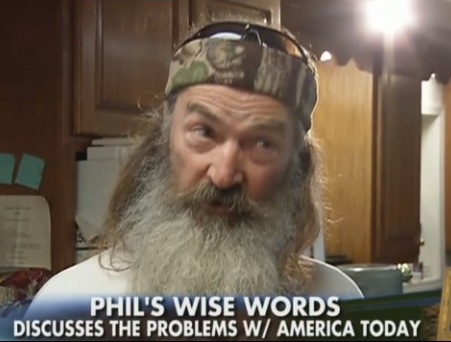
philThere is a meaningful question hiding among the Palinesque blather over Phil Robertson’s suspension from Duck Dynasty. We seem to have reached a broad general agreement that differing viewpoints, choices and values should be tolerated in an open society. So how much protection and tolerance should we grant to expressions of bigotry?

We have fought to ensure that voices outside the conventional mainstream have room to be heard in the public square. Strip clubs are protected under the First Amendment. Schools and other public venues are prevented from imposing a majority value set on everyone else. Over the past generation, we have established a new consensus in favor of the open expression of ideas, regardless of how those ideas may challenge public assumptions or offend a few.

It may be time to wrestle more honestly with the question of how to cope with expressions of bigotry. We already protect bigoted political expression to a far greater extent than any other democracy. The Skokie case in 1977, in which a Nazi group was allowed to march through a predominantly Jewish Chicago neighborhood established our commitment to tolerating public expression of even the most offensive character.

What’s happening with Phil Robertson though is quite different from Skokie because this is not a First Amendment question. No one is censoring Robertson’s right to speak. America protects his right to spout off his ignorant opinions to anyone he wants.

No one is going intervene legally to stop the Robertson’s from taking their faux-reality antics over to Glenn Beck’s traveling freakshow. The question is not one of free speech, but the marketplace of ideas.  The question is: What are we going to let people express without relegating them to the cultural margins?

Tolerance is a tough value to protect. The reason we shudder when someone is allowed to express racist or homophobic opinions in a generally respected forum is that bigotry thrives on tolerance. Unchallenged expressions of bigotry spread the disease like a flu victim on an airplane. Much of the progress achieved by minority groups in America over the past generation grew out of a commitment to challenge bigotry wherever it appears.

That said, who gets to decide what is and is not tolerable expression? Robertson’s comments are particularly interesting in light of this question. Is there anyone with family ties to the South who was honestly surprised by what he said about homosexuals and race relations?

Robertson’s Holocaust denial-style reinterpretation of race relations was racist and ignorant. It is also the consensus opinion of most white men over 50 in the South. His comments on “Shintos,” gays, blacks and others were incredibly stupid, but they were far more nuanced and far less inflammatory than the comments and accusations that surrounded Paula Deen.

And let’s remember, Duck Dynasty isn’t Meet the Press. If you can’t appear on a goofy reality show in a third-rate network after making a series of ‘drunk uncle’ comments in an interview, then few Southern white men are fit for TV. This is not a straightforward issue. Tolerance means creating an open marketplace of ideas. It means having a choice between Glee and Duck Dynasty, between Starbucks and Chik fil-A.

The world will be a better place when the bigoted opinions and values expressed by Robertson sink into the swamps at the margins of our culture. At some point, as the racist and homophobic ramblings of guys like Robertson are shifted farther and farther to the cultural margins, we may decide that they deserve some kind of protection. We are not quite there yet. Today, Robertson is a frightening reminder of just how much arrogant bigotry still pumps through the veins of our society. That bigotry still impacts people’s lives in ways that darken their horizons and limit their potential.

Does bigotry deserve tolerance? In a sense, it does. To a certain extent, “tolerance” means letting Phil Robertson speak and letting him be judged by his words. In an open culture, Robertson deserves the same freedom to express his dumb opinions that we grant to the noblest Kardashian. And we all have the right to change the channel, throw away our fake beards, and work toward a time when such expressions become too irrelevant to invoke outrage.

****

“I hate Illinois Nazis”

Tagged with: , , , , , , ,
Posted in Civil Rights, Race
Goodreads

Enter your email address to subscribe to this blog and receive notifications of new posts by email.

Join 448 other subscribers