
Revenge of the Reality-Based Community

southerntrump“I beheld the wretch — the miserable monster whom I had created.”
Dr. Frankenstein

Early in the second Bush Administration, even before the 9/11 attacks, reporters began to describe a strange pattern of delusion among aides and advisors. Any expression of doubt or dissent was punished. Loyalty was valued far beyond talent or effectiveness. Inconvenient facts were brushed aside with reference to hollow talking points. It seemed that a commitment to ideological purity had replaced any concern for results.

Wrestling with the bedlam of modern Republican politics, commentators are asking what went wrong. Who led the Republican Party into this fever swamp of fear and delusion? Was it the Tea Party? Should we blame Sarah Palin? Did the media create Donald Trump? This is not a recent phenomenon. Fantasy agendas that are tearing the party apart in this election cycle were already in full-flower fifteen years ago, guiding the Bush Administration from one bizarre catastrophe to the next.

Getting to the core of this problem requires us to examine dark compromises forged over generations and concealed in determined denial. Only by rethinking the terms of the party’s late-20th century resurgence can we build an organization capable of governing. Changing course will require a redefinition of a Republican identity, a process that the party might not survive.

When Karl Rove in 2002 mocked the impotence of the “reality-based community,” he was describing a new, fully mature Republican strategy. As insane as it sounds, there was a powerful logic at work in Rove’s philosophy. Any understanding of the party’s present trouble must square with this quote:

Rove derided those who “believe that solutions emerge from your judicious study of discernible reality. That’s not the way the world really works anymore. We’re an empire now, and when we act, we create our own reality. And while you’re studying that reality — judiciously, as you will — we’ll act again, creating other new realities, which you can study too, and that’s how things will sort out. We’re history’s actors . . . and you, all of you, will be left to just study what we do.”

The icing on this rhetorical cupcake was Rove’s refusal to even acknowledge what he’d said, followed by a sustained attack on the journalist who reported it. Reality, if it challenges ideological purity, is treason. Reality, in that way of thinking, is a mere construct that belongs to the winners. Those who concern themselves with accuracy, who allow themselves to be constrained by empirical measures, are history’s losers. They are destined to be forgotten, obscured in the shadow of The Great Men.

Anyone familiar with Republican figures from the 70’s or 80’s would be shocked by this kind of talk, so where did it come from? How did a party of pragmatic, almost frustratingly prudent men and women descend into calculated delusion?

It started with a compromise designed to reconcile the Party of Lincoln with the fiercest defenders of Jim Crow. It started with a decision to reorient the Republican Party on religious grounds.

Republicans in the last third of the 20th century faced an opportunity paired with a problem. Since Truman’s decision in 1948 to desegregate the military, Democrats had gradually been alienating Southern racial conservatives. By the seventies, high-level defections of Democrats in the South had begun, but there was still no Republican grassroots infrastructure in the South to support them.

Southern states have never in their history supported a two-party system. Unless Republicans could find a way to flip the entire Southern political infrastructure, the handful of Republican Congressmen and Senators in the South would continue to function as independents.

A party built on commerce, trade, and professional interests, a party of enthusiastic capitalists could stir no emotional energy in the conservative South. An attempt to recruit white Southerners with open racial bigotry was impossible. Whatever latent racism the GOP held was no more pronounced that what existed on the Democratic side. It was neither welcomed nor cultivated. More importantly, by that time explicit white supremacy had become politically toxic. An emotionally compelling appeal to the fears of racial conservatives would have to be delivered by proxy, veiled behind parallel rhetoric.

Nixon tried to use crime as a rhetorical proxy for racial fear with some minor success. Others experimented with fiscal policy or anti-feminist demagoguery with little effect. For all the talk of a “Southern Strategy,” no effort conceived by Republican insiders to flip the South ever made any headway. Republicans had too little understanding of the culture to make gains. Only an invasion by fleeing Dixiecrats could change the map.

Our breakthrough happened when religious fundamentalists in the South organized their resistance to the Carter Administration’s campaign to desegregate private religious schools. Televangelist Jerry Falwell’s Moral Majority was the first successful effort to recruit Southern racial conservatives to the Republican Party. Behind a cloak of religion, they could finally activate white nationalists without talking about race.

The GOP already contained a small but vocal bloc of voters motivated by religious issues. Republicans tolerated them with patient derision, confident that their occasionally loony activism could be dismissed with a bit of harmless pandering. Efforts by TV preachers to move their viewers into the Republican Party changed the balance of power inside the GOP. Now a Republican candidate could say a few nice things about prayer and God and utter the word ‘Jesus’ and suddenly whole new regions of the country were open to recruitment. Republicans all over the country who resisted religious appeals were now on the defensive.

Appeals to religious fundamentalism offered a tailor-made smokescreen, a rhetorical shield behind which the battle over white supremacy could continue to be waged. Religion, after all, is culture. What whites all over the country feared most in the demise of Southern segregation was the end of their cultural supremacy. This was and is far more than a sentimental attachment, far more than mere bigotry. White cultural and political dominance was the key to well-being for many, especially at lower income tiers.

Ending school prayers to Jesus meant an end to something far more politically significant than faith. When “Happy Holidays” replaces “Merry Christmas” there is more at stake than religion. A monolithic public culture built around a dominant white racial identity was disappearing. Along with it a whole collection of quiet preferences that gave whites unique access to jobs, education, housing and political influence were eroding away.

When millions of Southern whites frightened by desegregation pivoted into the Party of Lincoln, something had to give. This marriage between Southern racial conservatives and America’s party of commerce and trade could only be sustained through a collective commitment to delusion.

Older Republicans from the party’s traditional commercial wing pretended that nothing about the party had changed. They convinced themselves that they had simply prevailed in a long ideological struggle that brought millions of new adherents suddenly into the party. One by one, they were eventually overwhelmed by the forces they unleashed and refused to acknowledge.

Meanwhile, racial conservatives pretended that their “culture war” was about communism, or socialism, or strangely enough even a love of capitalism (which they mostly despised). And above it all sat the most bizarrely delusional fantasy of all – the insistence that none of this had ever happened.

To this day, Republicans will uniformly insist that the flight of the Dixiecrats never occurred. Never mind that cavalcade of characters from Strom Thurmond to Phil Gramm to Rick Perry and crazy Judge Roy Moore. The great migration of southern racial conservatives from the Democrats to the Republicans is, to their insistence, a mere myth.

Leveraging religious fundamentalism as a political force created consequences beyond mere rhetoric. Central to this worldview was a denial of Enlightenment ideas about the foundational value of science and data. Coupled with the wider decline of social capital institutions that once filtered the crazy from our political system, this uncoupling of ideology from empirical results unleashed a monster. A smokescreen of religious fundamentalism allowed Republicans to recruit racial conservatives in the South, but expansion came at a cost. With facts discredited, no force could contain the wave of crazy that broke across the party of prudent, intellectual conservatism.

By the second Bush Administration, the Republican Party was an entire political infrastructure premised on fantasies. Those who carefully indulged and protected those fantasies were rewarded. Figures who foolishly pointed out the fantasies were derided, punished, and pressed into political exile.

A political agenda built on delusions created the same quality of outcomes one would expect from drunk driving. However, political consequences are slow to manifest. The connection between policies and outcomes can be obscured by marketing.

Nevertheless, in time tax cuts produced massive deficits. Ever looser gun regulations produced thousands of needless deaths. Pointless wars produced global instability on a massive scale and a terrible tide of death and debt. Bigoted rhetoric drove non-whites and urban voters out of the party. Refusal to acknowledge climate change fed accelerating climate change. Blind financial deregulation produced unprecedented economic collapse. Cuts to the social safety net led to ballooning poverty. Tax cuts for the rich made the rich richer. Meanwhile public institutions shriveled and public faith in government collapsed.

Put another way, we experienced all of the obvious consequences from our new policy priorities. Meanwhile Republicans worked harder and harder to protect the delusions that held the party together. Failure inspired an aggressive backlash against doubters. Disasters led to repeated doubling down on policies that produced them. Locked in a cycle of delusion necessary to preserve the party’s power, Republicans resolved to respond to the last crisis with even more committed dissociation.

Instead of a reckoning or reconsideration, failure spawned ever more vociferous insistence on ideological purity. Fanatical purges of ‘establishment’ figures who dared to suggest restraint came in tighter and tighter cycles.

One of the party’s reviled dissidents, Bruce Bartlett, summarized this mindset more than a decade ago in comments about George W. Bush:

“This is why George W. Bush is so clear-eyed about Al Qaeda and the Islamic fundamentalist enemy…They can’t be persuaded, that they’re extremists, driven by a dark vision. He understands them, because he’s just like them. . . .

“Absolute faith like that overwhelms a need for analysis. The whole thing about faith is to believe things for which there is no empirical evidence. But you can’t run the world on faith.”

Facts are always elusive in politics, but they remain unalterable and non-negotiable. They may be misrepresented, distorted, or suppressed, but they never go away. Lies are fast and facts are slow, but what we borrow in the space between deception and reckoning will always be repaid with terrible interest.

The Republican Party chose to embrace an entire platform of fiction to protect an unstable coalition too brittle to bend and too dear to abandon. Simply put, our modern Republican alignment comes from our effort to recruit white supremacists. Our dissociation from the world of empirical reality rises from the ideology we adopted to obscure that compromise.

Race may not be the most important issue in American life, but it is the keystone of Republican politics. Reagan once said “There are no easy answers, but there are simple answers.” Republicans face a simple answer that is also brutally difficult. Reckon with the ghosts of our 20th century racial compromise and we can perhaps build a more sustainable future. Continue to ignore that tumor and the cancer will spread.

This is the revenge of the reality based community in a nutshell. We will either be what we were created to be – the Party of Lincoln – or we will soon cease to exist. We will pay our debt to reality, or we will be left helpless in the hands of the monster we created.
Tagged with: , , , , , ,
Posted in Neo-Confederate, Politics of Crazy, Republican Party, Uncategorized

Link Roundup, 3/18/2016

From The Walrus: A deep dive into the worsening for-profit university scam.

From the Washington Post: The economics of washing machines as a lens on inequality.

From Gizmodo: Dominos’ quirky pizza delivery robot.

From Quartz: Historical price comparisons of video game consoles.

From Quartz: The collapsing value of ships.

From The Big Picture: Charting the expansion of negative interest rates.

Posted in Uncategorized

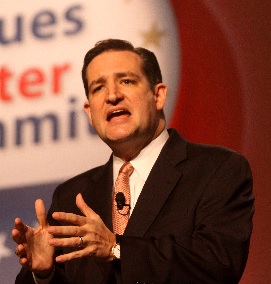
Has Cruz started his 2020 campaign?

cruzLast night’s results in the Republican primaries demonstrated the challenge the party faces in stopping Trump. Even with the loss in Ohio he gained significant ground. At this point it seems that only a collaborative strategy can stop him from seizing the nomination.
So why is Ted Cruz resisting such a strategy? It looks like he may have already written off this election and started to position himself for 2020.

Here’s where we are so far.

Once the dust settles from last night’s count it looks like Trump will have about 708 of the 1489 delegates assigned so far, about 48%. There are 983 delegates remaining to be assigned. Trump needs 54% of them to amass a delegate majority.

The problem going forward is that nearly all of the remaining contests are winner take all by congressional district, along with a few absolute winner take all states. That means Trump can potentially win large delegate sweeps with tiny margins of victory. Last night’s results in Missouri are an example of this. On March 15th Trump won almost 58% of the available delegates while earning barely over a third of the vote.

Most remaining contests are winner take all by congressional district, including the largest one, California (6/7). We still have contests ahead in Trump-friendly geographies like New York, New Jersey and Connecticut.  If one candidate could just gain five or six points on Trump, they could very nearly run the table on him in remaining races. But there’s a problem.

Making this a two-man race doesn’t actually help because neither of the remaining two candidates can be successful nationwide. Each would expect to beat Trump in different regions while losing decisively in others.

In a two-man contest, Cruz could win pretty solidly in places where the Republican Party is dominated by Protestant religious voters, mostly in remaining races in the Far West. Kasich would do better in places where Catholic religious conservatives dominate the party, like the Northeast and Upper Midwest.

If the goal is to stop Trump and play for a convention contest, Kasich and Cruz would have to put aside their differences and divide the map. Rubio recognized this play and told his Ohio supporters to back Kasich, helping to put him over the top. This strategy would probably work, blocking Trump from an outright win and letting the convention decide the nominee.

However Cruz, as usual, is being a real dick about it. He didn’t cooperate with Rubio’s strategy, helping to ruin Florida. Ted Cruz is crazy, but he’s not the stupid kind of crazy. It is beginning to look like he’s playing to be the 2020 nominee. This would make sense for a number of reasons.

First, it is very hard in the GOP to build the kind of national organization it takes to win a nomination. Candidates accomplish this in almost every case by running consecutively (Romney, McCain, Dole, Bush, Reagan, Nixon). One of the reasons this race is so nutty is that there was no decisive second-place finisher in 2012.

Cruz may be looking at the same math as everyone else and deciding that 2016 is a loser for Republicans no matter who gets the nod. If he goes for broke he risks smashing the party, a party that would otherwise treat him as the presumed nominee leading into a much more promising 2020 race. Notice that Cruz has been very careful to say he will endorse anyone who wins the nomination, including Trump.

Cruz may also be calculating that his chances of taking the nomination in a convention contest are not that great. He’s probably the most likely winner of a convention fight out of the guys in the race, but that’s still a very uncertain outcome. Convention delegates could go in dozens of different directions while creating a political atmosphere toxic for the winner.

Plus, the party generally hates him. He might have a fine collection of delegates on the floor, but the party’s remaining brokers will be working hard at a convention to make him a loser. Why contribute to that outcome just to lose in a 2016 General Election?

He may have decided to stay in this race and simply accept the outcome. If Trump comes up a little short Cruz might swing his delegates toward Trump to eliminate any doubt. This also sets up a precedent in favor of a plurality-winner, something Cruz might need badly in a subsequent race. Let Trump blunder into the buzzsaw of the General Election. Cruz can stand removed from the defeat and the party apparatus might still remain sufficiently intact to be useful to him in 2020.

Just speculating, but that seems like the best explanation of Cruz’s position. We’ll see.

***By the way, one caveat emerges when you do the math for the upcoming races. If they play out much like the previous ones and Cruz manages to win Indiana (very doable) and a couple of other smaller states, then California becomes the hinge. Based on that scenario, a Cruz win in California would deny Trump a delegate majority and leave Trump leading Cruz by only about 150 delegates.

That is almost certainly Cruz’s best potential outcome, one that depends on Kasich winning some Congressional Districts in the Northeast. In that situation, Rubio & Kasich’s delegates, if they decided to make a deal, would be enough to give Cruz a decisive and entirely legitimate win on the convention floor. That might also be the play Cruz has in mind.

Tagged with: , , ,
Posted in Election 2016, Uncategorized

Ending the era of the “job”

When my late grandmother was a girl in rural Arkansas, no one had a job. Everyone old enough to walk and carry a pail worked from dawn to dusk. Work was endless, cruel and utterly universal, but a “job” in term of formal employment for wages, was rare. Those few who had been reduced to performing paid labor for someone else were at the bottom of the social and economic scale, a grim, defeated remnant.

My grandmother’s world was a time-capsule from an older, pre-capitalist society in which land ownership determined rank, and rank determined economic outcomes. Almost everyone worked in agriculture. A thin class of merchants, professionals and tradesmen occupied the small towns, serving the needs of farmers. In that environment, people who worked for wages tended to be impoverished and desperate. Alienated from the land by some form of misfortune they were society’s most pitiable figures.

We often hear assurances that disruptive technological innovations will create more jobs to replace the ones they destroy. Evidence for this comforting notion comes from a look at overall job creation over the last century or so. That may be too short a span of time and too great a confidence in continuity.

People did not always have jobs. In fact, the idea that responsible adults were supposed to have a “job” has only been around for a few generations. Our economy was not always built around employment. There is no reason to expect that it always will be. Capitalism created our very notion of a job. Capitalism is well on its way to replacing that concept.

Whatever jobs capitalism creates are incidental to its central purpose. What capitalism does is replace manual effort as the means of generating value. That may or may not create any jobs. Let’s review.

A person works 50 hours to produce 50 units of value. Instead of consuming all fifty of those units, he and ten other people each take 10 of those units and invest them in a project of some kind. Maybe it’s a machine, or a canal, or a company that will do the work in a different, more efficient manner. That new enterprise allows them to produce five times as much value from the same overall investment of work. From the returns on their successful investment come new investments that transform other kinds of work, and the cycle takes on an exponential character. Value, invested in improvements, yields new value beyond what was possible through labor alone. Capitalism may or may not create a job for someone, but capitalism always replaces work.

An example of this process can be seen in the story of the Pecan Shellers Strike in Depression Era San Antonio. This sheds light on the way innovation, organization, and government interact to facilitate capitalism.

In a strange twist, pecan production in San Antonio had previously been an industrial operation, but in the late 1920’s major producers stopped using machines. A massive influx of refugees from Mexico’s Civil War gave them a cheap source of labor, politically impotent, economically desperate, and willing to work for subsistence. Faced with this massive pool of exploitable labor and no political force to check abuses, businesses that controlled access to the pecan supply reverted to a pre-capitalist, almost feudal model of production. Capital owners lost their incentive to continue investment and became rentiers.

Entire families, including small children, worked to manually shell pecans in a style of labor that would have been familiar three hundred years before in Europe. Output dropped along with productivity and prices to consumers rose. As profits wobbled, producers simply placed more pressure on desperate workers.

First workers began to organize. A strike organized by a newly formed union won small wage gains for workers, but kept them locked into miserable conditions.

Next came government intervention in the marketplace. Labor organization achieved little through strikes and negotiation, but by organizing they were able to begin exerting political pressure. What broke this situation was a cultural/political innovation that tipped the balance in favor of technical innovation – a minimum wage. The Roosevelt Administration in 1938 intervened to ensure that the pecan shellers were covered for the first time by a federal minimum wage. That wage was significantly higher than what the shellers were earning previously.

With the stalemate broken by government regulation, capital owners resumed investment. Within months after the federal government imposed a minimum wage, an industry that had employed more than 12,000 people had roughly 3000 workers. Soon that number had dropped to a few hundred. Where thousands of people, many of them children, had been earning a penny or two an hour, a few hundred people were now earning more than a dollar an hour while machines performed most of the labor. The union disappeared, its workers dispersed, and its purpose diminished. On the capital side, less innovative and efficient producers went out of business, eliminating the rentiers, and the industry consolidated around the most successful investors.

What did the newly unemployed do with their lives? Attend school, mostly, since the bulk of them had been children. In strictly technical terms, the final arrival of industrial pecan production produced a net gain in “jobs” since none of the people involved in pecan production previously were employed in any formal sense. The arrival of industrial capitalism, paired with intelligent regulation, replaced the informal though brutal labor of thousands with a few hundred people who now had a “job.” Capitalism eliminated hundreds of thousands of hours of manual labor while creating the” job.”

What capitalism giveth, capitalism taketh away. Consider the evolutionary process we see in the Pecan Sheller’s strike and then extend it forward. What you see is the constant, relentless replacement of human work with technical innovations funded and enabled by capitalism. Sometimes capitalism creates jobs, but usually only where no formal employment existed before. Capitalism gave rise to the “job” as an intermediate stage. We are moving past that stage.

A fortunate few pecan workers saw their wages rise while the rest of the labor pool disappeared. As this cycle has repeated, the immediate rewards have consistently landed in fewer and fewer hands. Through cultural and political innovations (public schools and welfare programs), we have managed to spread the benefits of innovation beyond the immediate winners. Now we need to recognize our changing circumstances are create new methods to do this again.

Look closely at the labor which was replaced by one worker. The man (it would have been a man) who worked in the new pecan-shelling factory was now earning enough to support an entire household in a style far better than they would have enjoyed before. Previously, that family of six or eight would all have been working at shelling pecans. Now one person did that work using machines, freeing up a parent to tend to the family and children to attend school. That school could now be funded by taxes imposed on workers earning far higher wages and on capital owners making tremendous profits.

At the same time elsewhere in the world, other societies were experimenting with socialism to achieve similar goals. Their results ranged from marginal to disastrous. Our approach worked well because we were careful not to crush the freedom of capital owners to invest in new innovations. Instead of imposing central ownership of capital with the bureaucratic rigidity of collectivism, we kept capitalists free to make their own decisions.

Replacing human work with capital plus machines created a new wave of value. Political innovations channeled a portion of that value into a process that gradually converted a city of wretched slums into a first world metropolis. With each new cycle of innovation, more work has disappeared. In earlier cycles, almost all of that work was mechanical, replacing nothing but muscle. But as it had advanced, mechanization is being replaced by even more lucrative automation, replacing non-mechanical human functions.

Changes in the character of work in our time are putting new strains on the “job” as a social construct. Fewer Americans are “employed” than at any point in our post-agricultural history and the number is in continual decline.

Our political and economic order came to be organized around the idea of a full-time job. A job is where we get money. A job is how we get access to health care. We enforce our notions of fair play, economic justice, and basic human rights by regulating the terms of a job. When Donald Trump sees a protestor at his rally he tells them to “get a job,” because good, decent citizens have jobs.

What happens when the same economic forces that only a short time ago created our concept of a job suddenly render that concept obsolete? We have already entered an era in which jobs are transient, popping into existence and then disappearing in a short span of time. Fewer Americans than ever before are ‘in the workforce’ by the terms we have defined. More and more people earn their money from activities that do not look like a job. That trend is accelerating.

Just a decade ago, about 100,000 Americans worked in the video rental industry. The largest employer in that business, Blockbuster, employed more than 60,000 people at its peak. If wages for corporate office employees are included, then the average worker at Blockbuster earned about $35,000 a year, adjusted for inflation. Today, more than 95% of those workers have lost their jobs.

More than any other company, Netflix represents the force that destroyed the video rental industry. Average annual earnings for their employees are well over $125,000. Software developers and IT engineers there can earn base salaries in excess of $200,000, along with stock compensation that can double that amount. Instead of supporting 60,000 workers, Netflix has 3000 employees.

Given the compensation involved, it should not be surprising that careers in these new industries tend to start late and end early. Fifteen years as “labor” in a company like Netflix is enough to allow someone to spend the rest of their life earning a living from capital. Across of much of their remaining life, that former Netflix employee will be technically out of the labor force. And for many of the years prior to working at Netflix, that employee would have been technically unemployed, occasionally showing up in census records in the bottom-earning quintiles.

This new pattern of employment contributes to one of our most worrying economic trends, the rising earnings of the 1%. Our Netflix employee at different points in her life might show up in economic statistics as “poor,” “unemployed,” “out of the labor force,” and also spend several years earning wages that rank in the highest 1%. In fact, a study at Cornell found that one in twelve Americans will earn wages in the top 1% at least one year of their careers. Almost 40% will chalk up at least one year in the top 5%. Netflix employees at different points in their career arc are padding our measurements of the 1% and the poor.

Combine the statistical impact of workers displaced by the rise of companies like Netflix with the strange statistical impact of workers benefiting from these trends and the result is a hopelessly confusing muddle. When we examine employment and income we still see them through the lens of 20th century industrial capitalism. We are living through a massive economic boom making Americans richer, freer, and more in charge of their own futures. When examined through a 20th century framework it looks a lot like a Depression.

Our political innovations are dragging behind our technical progress to a degree that is threatening an earthquake. A combination of capitalism and technology is innovating us out of a job, and on the whole it is a fantastic thing. When thousands of pecan workers lost their jobs to political and industrial innovation, the results were fantastic. What made those results great was our willingness to change our culture to spread the value created by capitalism. Taxes funded schools. Regulations blocked capital owners from exploiting workers to extract rents. We adapted quite well.

Adaptations that helped my grandmother’s generation absorb their new realities have lost much of their utility. In our next stage of economic advance, our most lucrative work will start relatively late in adulthood, after many years developing knowledge, skills and experience. That lucrative work may or may not look like a job.

More people than ever before will earn the bulk of their living from accumulated capital. Labor, in a traditional sense, will evolve into narrow specialties or creative enterprises. Most manual labor will be in service professions. Even the most financially successful workers will have to survive many years of adulthood with minimal incomes, or none at all. This new economic order is already producing vastly more wealth than anything that came before, but it has also broken the political and cultural model under which we still live.

With no adaption, our current economic and political model will create a terrifying rift. Currently, people with significant family support or inherited money are the only ones who get to participate in this new economy. If you cannot survive from the ages of 17 to about 30 without a steady income while also investing significant capital in your own professional development, you cannot cross the chasm. Millions of talented people are being left behind. We are all losing what they could have contributed.

Relatively few of San Antonio’s pecan workers made the leap to industrial work, but they didn’t have to spend ten years in expensive education and unpaid internships. Adaptations that worked in that environment are not working anymore.

A basic income could preserve the potential of this emerging economic model. Adaptions created to cope with 20th century conditions are reaching the end of their usefulness. Our best hope is a model that makes everyone a stakeholder in this economy while preserving the freedom of capital owners to invest and innovate.

A minimum wage, regardless how high it may be set, provides no relief to those without a job. As the jobs era comes to an end, it is time to start looking for ways to deliver a more meaningful shared prosperity. A basic income is the logical answer to a post-jobs economy.

Tagged with: , , , , , ,
Posted in Economics, Political Theory, Uncategorized, Welfare State

Link Roundup, 3/10/2016

From Rolling Stone: Part one of a series on the accelerating development of artificial intelligence.

From Eater: West Virginia lawmakers fall ill from drinking raw milk, right after legalizing the sale of raw milk.

From Slate: In a reminder that karma can be horribly cruel, a particularly obnoxious gun nut was shot by her 4 year-old.

From the Washington Post: Just a reminder that thanks to our lax gun laws, toddlers kill more Americans every year than terrorists.

From Wired: Great for the title alone: Mutant Yeast Are Cranking Out Pharma’s Next Superdrug.

Posted in Uncategorized

Technology vs. Biology

poc

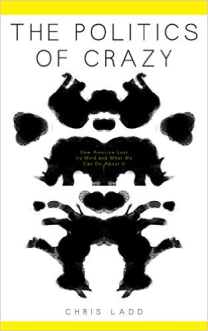
The Politics of Crazy, available at Amazon

Imagine for a moment that by next summer, through some miracle of capitalism, every product you purchase cost half as much as its price today. Every tire, every banana, every patio chair, every sheet of paper, the cost of all of it would be slashed. Now ponder these questions.

How would this happen?

Would you even notice?

Would you be better off?

How would such a change be reflected in our economic statistics?

Who would benefit the most, the least?

What sort of things might become relatively more expensive if the price of all our stuff collapsed?

This exercise is important because it reflects a reality we’ve overlooked. We are living through a collapse in the cost of nearly everything. That sounds like a wonderful improvement in human existence, and it is. However, it is producing some strange and sometimes counter-intuitive outcomes, starting with the fact that few of us even recognize it happened.

No transformation this powerful, no matter how good or beneficial, can occur without inspiring fear. Insecurities fueled by this revolution are triggering political earthquakes in both major parties. Our world has been turned upside down in the best possible way, but we are struggling to understand what happened and what it means. If we want this process to continue, and we should, then we will have to recognize its implications for our culture and our biology.

Most creatures evolve solely on a biological basis. We have conquered our planet by developing the means to evolve on three, loosely connected planes: biology, culture and technology. As a weak, slow, soft-bodied creature, our biology leaves us poorly adapted for life on Earth. Our capacity to develop sophisticated cultures and technologies has powered us ahead of the rest of the ecosystem.

Through culture we developed capitalism. As that cultural adaptation rapidly spread it has powered an explosion in technological innovation. Those innovations, and the disruptive replacements that they bring, are now coming so fast that they are tearing at our biological limits, creating ripples in our culture.

We are reaching a point at which our technical developments may be limited by our cultural and biological capacity to absorb them. Our pace of innovation is straining the adaptations that enabled them in the first place. Our biology is being overwhelmed, both at a human level and on an ecological scale. We are in desperate need of political adaptations that can ease the pressure on our brittle minds and our strained ecology, allowing this remarkable pace of advancement to continue.

Two things can happen from here. We could experience a de-escalation of our evolutionary pace in the form of a widespread political or ecological failure. Or we could develop a cultural/political adaptation enabling us to continue, or even further accelerate, our technological advance.

The Politics of Crazy is an attempt, through a collection of short essays, to summarize this situation and describe possible remedies. Ideas described in the book are perhaps worth revisiting and refining. It might be helpful first to expand on the following evolutionary question in the context of technological advance: Why don’t we recognize what has happened to us?

More specifically, why do we find it so difficult to recognize how much life has improved over such a short timespan? And how do those limitations impose obstacles to cultural or political adaptation?

Certain evolutionary realities limit our ability to operate in a radically dynamic environment. We do not naturally recognize macro phenomenon. We experience weather. We do not experience climate. We experience our work, our earnings, and our day to day purchases. We do not experience an economy. We experience interactions with family, friends, and a local community. We do not experience politics. We remember family stories and myths. We have no innate consciousness of history.

Most importantly, we do not natively compare the past to the present, especially a past that extends back prior to our own individual adulthoods. Our commonsense experience of the world is a kind of snow globe, isolated from any natural awareness of the wider forces that shape our existence.

Our minds evolved across hundreds of thousands of years to comprehend and communicate reality in terms of symbols, archetypes, and myths. Our minds possess an astonishing capacity to process symbolic information and yet a relatively trivial natural capacity for math. In a fraction of a second a human brain can identify which food will taste best or which face is most friendly, a task that computers still struggle to master. No human alive can perform math at the speed of an obsolete Blackberry smart phone.

Literacy is a brand-new cultural adaptation for which our biology has not yet adapted. Humans have experienced a near-universal capacity for reading and writing for about four-five generations, depending on region. No similarly broad mathematical literacy has developed in humans and thanks to the rapid evolution of our machines it probably never will. We thrive on symbols and while struggling to leverage empirical tools. We are biologically evolved to perceive reality through myth and magic.

Education can empower us to leverage an adaption delivered from one of our greatest cultural innovations: science. Even when we gain the capability to use critical thinking skills and empirical knowledge to analyze the world around us, our minds tend to rebel against the exercise. What we learn through critical exercises is almost permanently at war with what we innately “know,” creating a hum of constant tension sometimes described as “cognitive dissonance.”

Commonsense is an excellent guide to day to day matters in a world of slow, incremental change. Our heads evolved in slower world. For hundreds of thousands of years, changes on a large scale occurred either very slowly over the course of many lifetimes, or in highly infrequent, catastrophic bursts. Major, noticeable changes happened perhaps once in a lifetime wrought by political violence or natural disasters.

Relying only on our natural senses, we do not cope well with a world in which Blockbuster Video or Lycos or Borders Bookstores can travel from birth, to ubiquity, to collapse in a couple of decades. Our minds cannot innately comprehend a reality in which our daily choice of motor fuels can influence global climate. A world in which jobs, marriages, community ties and every other aspect of our existence and identity is transient performs a kind of slow torture on our brains.

Sustained exposure to high levels of stress creates serious physical issues. Those problems are reflected in health statistics. More Americans die every year from drug overdoses than from car accidents. Most of those overdoses involve prescription medications. We use anti-depressant medications on such an intensive scale that their residue shows up in measurable amounts in river fish.

There is a temptation to dismiss the crowds flocking to see Donald Trump as merely racist or dumb. This is too simple a response. First of all, exactly the same forces of fear and insecurity are driving crowds of ‘educated’ voters to Sanders’ rallies. Trump may be attracting a pool of low-prestige voters, but that shouldn’t distract us from the signal being sent by our environment. Like our rising sea levels, they are marking a form of evolutionary pressure, a pressure we will regret ignoring.

Those who recognize the massive human value in our technological advance must recognize an additional reality. To support this transformation over the long term we must work to adapt our culture in ways that are sensitive to our biological limits. There is only so much dynamism our heads can tolerate. A century and a half ago we began to evolve a social welfare system to make the relatively rapid disruption and dislocation of capitalism supportable. As we race toward a kind of technological singularity, we need a similar political adaptation for our age.

That adaptation is coming, one way or another. We could get political leaders in the mold of Bernie Sanders or Donald Trump, who slam on the brakes of economic and technological progress, triggering the same class of catastrophe wrought by any other sudden halt. Or we will develop something smarter, something that will enable us to not only endure, but to thrive in a far more dynamic world.

How do we embrace these advances in a way that our biology can tolerate?

Tagged with: , , ,
Posted in Politics of Crazy, Uncategorized

Link Roundup for 3/4/2016

From Slate: In what is becoming a monthly feature, last month was the hottest ever recorded.

From the Dallas Morning News: Another religious nutter is about to take her place on the Texas State Board of Education.

From Visual Capitalist, via the Big Picture blog: A beautiful map demonstrating where America’s wealth originates.

From LiveScience: The promise and challenges of bio-computing.

From the Washington Post: A surprising comparison of the candidates’ fiscal plans.

Posted in Uncategorized

Why Republican criticism of Trump fails

romneyMitt Romney took to Twitter on Monday to denounce Trump’s infamous KKK hedge. For months Romney has been cautiously critical of Trump, but only now does Romney consider Trump’s antics “disqualifying.” Other conservatives have now echoed Romney’s comments and a solid opposition to Trump is beginning to take shape.

But, why?

For almost a year Donald Trump has been bloviating bigotry. His insulting comments about Mexicans and Jews earned little if any complaint. Republicans have yet to criticize his ugly comments on Black Lives Matter protesters or his efforts to incite his followers to violence. Trump has been repeating conspiracy theories and re-tweeting comments from Neo-Nazis for months and no one in the party seemed particularly troubled.

An opportunity looms behind the threat Trump poses to the GOP. In recent decades, the Party of Lincoln has contorted itself into a vehicle for the frustrated defenders of Jim Crow. That effort was always toxic, gradually perverting the party’s meaning and purpose. Defeating Donald Trump will require us to confront a painful racist legacy and restore a lost Republican agenda. Accomplishing that feat could break the Blue Wall and create a new, more vibrant Republican future. Unfortunately, the first steps will be painful.

Before we can confront the racism of Trump, we must come to terms with bigotry that sits much closer to the party’s core. Unless we reckon with the genteel racist rhetoric of respected figures like Mitt Romney or Paul Ryan, any triumph over trolls like Trump is just a lull between disasters.

Romney’s comments go to the heart of what Trump’s supporters hate about the Republican Party – its hypocrisy. For half a century Republicans have been trying to recruit white nationalists without stating our intentions out loud. During election seasons we issue coded assurances to nervous racists that we support them. Concealed beneath rhetoric about constitutionalism, or religious freedom, “conservative values,” or government dependence is a promise to put the genie back in the bottle. Brown folk and women and foreigners will all be nudged back into their rightful place, properly subjugated and presumably happy. We will “take our country back.” We will “make America great again.” America will once again be a white Christian nation.

Frustrated by our failure to overtly embrace their agenda, Republican bigots have finally found a candidate who has dropped the pretense and run an explicitly white nationalist campaign. We are discovering that no one ever really cared much about abortion. No one cared about fiscal restraint, or tax cuts or nationalized health care. The Republican base we painstakingly assembled across fifty years is only really interested in one thing – preserving the dominant position of their white culture against a rising tide of pluralism. Other issues only mattered to the extent that they helped reinforce and preserve white supremacy.

No one should misunderstand Romney’s supposedly courageous stance against Trump. Renouncing the KKK requires no courage whatsoever from anyone in almost any era. His stance is not a departure from past practice. Mitt Romney condemned the KKK? George Wallace was doing that in the Fifties.

The Klan was designed to be a shadow organization. It was engineered to be disavowed. They wear hoods and operate primarily at night. Everyone who occupies some position of authority or social dignity is supposed to express outrage about the KKK even if they are members. That’s how white nationalist violence was executed in an otherwise “free” society.

Americans have always embraced colorblindness as a component of gentility, a class marker. Slaveholders insisted that they bore no animosity toward blacks. They were merely playing their appointed role in a natural order. Confederate Vice President Alexander Stephens was careful to describe the compassionate intentions of enlightened Southerners toward African-Americans. Blacks would uniquely benefit under the Confederacy, by “teaching them the lesson taught to Adam, that ‘in the sweat of his brow he should eat his bread,’ and teaching them to work, and feed, and clothe themselves.”

Sound familiar? It should. Here’s what it sounds like when Congressman Paul Ryan repeats Stephens’ ideas:

“We have got this tailspin of culture, in our inner cities in particular, of men not working and just generations of men not even thinking about working or learning to value the culture of work, so there is a real culture problem here that has to be dealt with.”

When Strom Thurmond broke from the Democratic Party over Civil Rights and launched his own segregationist campaign for the White House, he stressed his friendly relationships with blacks. Thurmond explained that segregation was the key to harmonious racial relations. Just as today’s Republicans blame Black Lives Matter protesters for stirring up unrest, Thurmond explained that all was well in the Jim Crow South before meddlers intervened: “the clamor comes from agitators and socially maladjusted persons who do not care about or understand the conditions existing in the many communities in the United States where people of different races live and work together.”

Alabama’s fiercely racist Governor George Wallace distanced himself from the Ku Klux Klan, not because he was a racial liberal but because that’s what decent people do in well-bred society. Wallace never took pictures in front of burning crosses, but he nonetheless managed to get his message across.

There are no racists in America. Properly domesticated Americans conceal their racism beneath a colorblind veneer. “I don’t see color” and “I have lots of black friends” are mantras that allow systemic racism to go unchallenged. Colorblind is just blind, and blindness is a comfort we indulge in to avoid seeing the reality around us. We live in a system engineered to produce unjust outcomes along racial lines. Half a century after the Civil Rights Acts, we still fight to avoid recognizing that injustice.

Ta-Nehisi Coates described the language we use to express racism in a 2013 essay for the New York Times:

In modern America we believe racism to be the property of the uniquely villainous and morally deformed, the ideology of trolls, gorgons and orcs. We believe this even when we are actually being racist. In 1957, neighbors in Levittown, Pa., uniting under the flag of segregation, wrote: “As moral, religious and law-abiding citizens, we feel that we are unprejudiced and undiscriminating in our wish to keep our community a closed community.”

What’s missing from Republican criticisms of Trump is any distinction deeper than rhetoric. None of the candidates has set themselves apart from Trump on his most extreme white nationalist policy positions. Opposition so far all comes down to either language or a futile insistence that he’s not conservative enough. That kind of attack will never hit home.

Romney’s attack on Trump is impotent because it is not about racism. It’s about manners. For well-mannered Americans from good backgrounds, racism is like Fight Club. Speaking openly about bigotry is a social faux pas. Outrage over Trump’s Klan gaffe is nothing more than tone-policing.

Remember, Mitt Romney is the same guy who whitesplained the opposition he got from the NAACP in 2012 by implying that they just want “free stuff.” Romney is the 47% guy. This year’s establishment moderate, Jeb Bush, repeated the same ‘free stuff’ line in South Carolina last fall. None of the GOP field drew any principled distinction from Trump on his refugee policy, his stupid border wall, or his foreign policy militancy. Sophisticated people cloak their racism in a well-turned phrase. Romney isn’t criticizing Trump for racism. He’s just ridiculing him for using the wrong fork. Good luck with that.

Supporters often remark that Trump “tells it like it is” or he “says what we’re thinking.” Through color-blind glasses this paints a strange picture. After all, when Trump isn’t lying he’s generally either evading or distorting. Voters are describing him as a straight shooter not because he’s telling the truth, but because he has abandoned the politically correct language used by the ‘in-crowd’ to embarrass less eloquent racists. He is breaching a barrier of class, manners, and education.

Trump is merely a step in a natural progression. If not him it would have been someone else. Defeat him this year without confronting the racism that fueled his campaign and we’ll just keep fighting the same monster again and again with different haircuts. Thanks to our colorblindness, racism acts like dark matter in our political universe, perverting policy outcomes in ways we find impossible to understand. As long as we tolerate systemic racism the prosperity, freedom, and success we would otherwise deserve will remain elusive.

Ironically, this is a time of opportunity for the Republican Party. We have nothing left to gain from continued pandering to a racist fringe. Unfortunately, we’ve forgotten other paths. Mitt Romney’s father, George, was one of the party’s greatest proponents of minority outreach. He represents a bridge to an era when Republicans took black voters seriously. Rediscovering that legacy could open up new possibilities and break the Blue Wall.

Nothing we do will change the outcome of the 2016 election. It’s over. It’s been over for years. Our own post-mortem of the 2012 Election made that patently obvious to anyone willing to face facts.

Our goal in confronting Donald Trump is not to win in 2016, but to halt the accelerating damage and build something new. By hitting us on this specific weakness, the Trump campaign is exposing the spot where our efforts should be invested. Mitt Romney does not consider himself a racist. You can be confident that he bears no open hostility toward other races or cultures. Understanding how an otherwise standup guy found himself pandering to racists will hand us a key that can free us from repeating his mistakes.

Making America “great again” is too modest a goal, one that implies our greatness is a limited resource that can only be mined from our past. Moving past colorblindness and denial to a basic awareness of reality will lay a foundation on which to build sound, effective policy.

The Trump campaign is a gift from the political gods. Confronting the forces that conjured him is our challenge. That fight could break the party, but that’s okay. This party hasn’t been fun for a long time. Time to build something better.

Tagged with: , , , , ,
Posted in blue wall, Civil Rights, Election 2016, Uncategorized

About Trump’s ‘Big Win’

Final delegate counts are still coming in, but the short story is this: Texas delivered the firewall necessary to blunt Trump’s momentum. Though he finished first in a lot of states, his overall delegate haul was just over 40%. This pattern is likely to continue.

Trump didn’t top 50%, the figure necessary in most states to trigger a winner-take-all result, in any of yesterday’s contests. His early burst of success has left him with only about 45% of the delegates assigned so far.

Over the next couple of weeks this split should continue, though he is likely to win all of Florida’s delegates. His next opportunity to pull away will be Ohio’s winner take all contest on March 15th.

If Kasich can hold his home state, and he is polling almost even there, then the delegate math for Trump gets very difficult. Almost all of the remaining states are proportional. He’ll need to poll in excess of 37-40% in each state to gain delegate majorities. As the resistance begins to coalesce that looks increasingly unlikely.

So far, it continues to look like a deadlocked primary.

Posted in Uncategorized

What to watch on Super Tuesday

Tuesday’s Republican primaries will start to reveal some of the complexity behind the nominating process. Or, to put it another way, they will make clear that this whole thing was supposed to be over already. Our primaries have evolved to crown nominees, not to select them. We are sailing into uncharted, treacherous waters.

Rules and practices vary so widely among the 13 states participating that it’s tough to pin down a standard figure for the number of delegates being assigned. In all, 595 delegates will be assigned to different campaigns based on outcomes on Tuesday. The process of selecting another 66 unbound delegates will be initiated.

Here’s a quick rundown of the states involved, their unique rules, and what to watch for in each contest.

Alabama – 50, primary

Proportional, with a split by Congressional District and statewide, and 50% winner-take-all threshold. Many states adopt this pattern, in which two pools of delegates are assigned by different methods, one by the statewide total and another by Congressional District. Outcomes are proportional, unless someone tops 50%, in which case the take the whole lot. We’ll call this the SEC primary method.

Expect most of the Deep South states to follow South Carolina in voting for Trump. They talk a lot about Jesus Christ, but their favorite political figure is still Jim Crow. One interesting race to watch here is Sen. Shelby’s re-election bid. He’s facing a semi-serious challenger. Difficult to tell how the crazy dynamics of this cycle might impact him.

Alaska – 28, caucus

Though described as a caucus, this is functionally a closed primary. Delegates will be assigned on a proportional basis among candidates earning more than 13% of the vote. You’ll see this method elsewhere and we’ll just call it the Alaska model.

As a closed vote in a small state, polling is pretty useless. It is impossible to predict how this might go, though it seems like the kind of place where Trump should do well.

Arkansas – 40, primary

Using the SEC Primary method for allocation. There are signs that Cruz may be doing unusually well here versus Trump. That may be a unique feature of Arkansas, or it may reflect a shift in late polling in the Deep South. This is a place where evangelical religion may be more important than immigrant-bashing. Watch outcomes in Arkansas’ northwest counties, the Wal-Mart corridor, for clues about the later direction of this race. It’s the only place in the state with a high concentration of educated professionals and expats.

Colorado – 37, caucus

No delegates will be assigned to candidates by voters in Colorado. All of Colorado’s delegates will be unbound. Several other states are sending unbound delegates, a method that gives extraordinary influence to the state party. These people will be interesting to watch in a convention fight.

Georgia – 76, primary

This is another SEC Primary in terms of the method. Trump is leading here by a significant margin, but this is a very fluid race.

Massachusetts – 42, primary

This is a purely proportional race, in which everyone earning more than 5% can win a delegate. Trump is leading in Massachusetts by a surprising margin.

Minnesota – 38, caucus

Delegates will be bound based on Congressional District and statewide results of a caucus vote. To earn delegates a candidate needs to top 10%. To win all of the state’s delegates a candidate needs to top 85%.

Oklahoma – 43, primary

Another SEC Primary. Trump leads in polls, but only by a small margin.

Tennessee – 58, primary

Another SEC Primary, with one interesting twist. No one earning less than 20% will be assigned any delegates from TN. The cutoff to win all of the state’s delegates is 2/3 rather than 50%.

Texas – 155, primary

Here’s where it gets interesting. A quarter of the delegates assigned on March 1 will come from Texas. Texas follows the SEC Primary method, splitting up the statewide and Congressional District results. The floor for delegate assignment is 20%. The results become winner-take-all at 50%.

Polls indicate that Cruz is within striking distance of the 50% cutoff. Anecdotally I can report that the same category of religious voters who are supporting Trump in places like South Carolina and Georgia are fiercely supportive of Cruz in Texas. In fact, they are electric and they are pushing very, very hard.

Cruz is virtually guaranteed 100 delegates from Texas. Combined with proportional results elsewhere, that’s enough to make him a force all the way to the convention floor. If he tops the 50% threshold here he might be the biggest delegate winner of the day even if he fails to win another contest. Cruz wins Texas and Kasich ekes out a win in Ohio on March 15 (66 delegates, winner-take-all) and you’ve got a deadlocked primary, followed by a floor-fight at the convention. Texas may be the only race you need to watch on Tuesday.

Vermont – 16, primary

There are Republicans in Vermont. With the stakes so high this cycle, expect all 15 of them to vote in this year’s primary. The state follows the SEC Primary method, without the CD split (small state).

Virginia – 49, primary

Delegates will be assigned on a fully proportional basis. Virginia is interesting because the counties around DC are essentially ‘East Coast’ in terms of their orientation. Beyond the DC suburbs it’s a Deep South state. The primary results, divided by county, will provide an interesting gauge of how the party’s so-called moderates view Trump, and how well Cruz can perform with evangelical voters. So far, the state’s religious fundamentalist leaders have lined up strongly in favor of Trump.

Wyoming – 29, caucus

Like Colorado, Wyoming will not hold a Presidential preference ballot, instead sending its delegates to the convention unbound.

Overall, it will be interesting to see whether anyone can top 50% anywhere. Evangelical voters also bear watching. As the race moves past the Deep South states where white identity issues are so close to the surface, will Trump still win religious voters? Is a Trump grand strategy starting to emerge from his word salad, in which Northern voters who care little about conservatism link up with religious bigots elsewhere to put him over the top?

By Wednesday we can put aside a lot of the speculation and start making predictions based on data. Should be fun.

Here are a couple of good sources for details on each of the individual races:

Frontloading

The Green Papers


Posted in Uncategorized
Goodreads

Enter your email address to subscribe to this blog and receive notifications of new posts by email.

Join 448 other subscribers